Tag: writing

  • Dating in a Modern World

    Dating in a Modern World

    Molasses drips from the girl’s tongue, a sticky mess of bitter sugar and orange marmalade. She lied when she said that she would date him. She had lied when she said she would not. Everything she has said is a lie that drips and then clings to her fleshen tongue.

    It wasn’t that he was unattractive just as it wasn’t that he particularly was. Only she felt drawn to him in a peculiar way that made her stomach twist and her brain decompose to a slovenly, inaccessible thing. It is what every novel has warned her against, this feeling that starts as something magical before surmounting into total destruction. Beauvoir, Elliot, Woolf – they have all issued her their warnings. A man always holds the promise of destruction. 

    Avery stares out the window of the language classroom. The sounds of the bus stopping and starting, the whirring wheels of bikes,the constant chatter on the street all float into the room. The windows are far too old to keep much noise out, and so every tone worms its way into the decaying wood and distracts her from the lecture. It isn’t a particularly interesting lecture, but just another too rapid summary of German grammar principles that the girl has already studied long ago. And even if she has yet to master them, she can not force her brain to concentrate upon the lecture. 

    He approaches her under the tree. Her afternoon has been a relaxing oasis of security away from the noisy streets, entirely restricted to the occurrences of her book. It does not matter that her exam is later this afternoon or that she misses home after months away. Her world is composed entirely of Jude the Obscure and the trials of marriage or not marriage in the late 1800s. Of course Jude should not end up with Sue, she thinks. Sue is a monster, a selfish and insignificant woman. Unworthy, she thinks. Subjugated, she corrects. She wonders if she too is that, a woman who has the power to destroy a man. She wonders if her actions can truly hold that kind of consequence. She wonders if she will herself be crushed by romance.

    “Do you mind if I join you?” he asks. He sits down without waiting for her answer and they begin to talk about literature. 

    “Politics have destroyed literature. What if I just want to like something because of the way it sounds or how it feels – no post-structural, post-colonial, post-patriarchial, post deconstruction. No theory, no thinking, just emotion!”

    “But what if literature could change the world?”

    “When has it ever? People learn about oppression, and they forget. It’s not easy to live always when recognizing that things are bad.”

    The boy and girl bicker about the purpose of books underneath her tree. He approached her, and asked what she was reading. He told her she was pretty, made her laugh, kissed her when least expected. He did everything right, and the rest is history. Together, they bicker beneath the tree. 

    “You read for pleasure and I read to try and change the world. Those are two inherently different things” she says.

    “But how have you actually changed anything, and what have you missed while trying?” 

    “And what has the world missed when everyone thinks and acts like you?”

    “Like what?”

    His eyes bear into her own. They’re warm, inquisitive, intense.

    “Like nothing’s worth fixing.”

    “And when did I say it’s not? Finding something futile and finding something pointless are also two inherently different things.” 

    “Avery, wenn benutzt du die dative Kase?” And her reverie fractures, and the boy disappears. 

    When the class finally lets out, she hurries from the room. Her legs ache from sitting still all day, and her mind is bored with repetition. The repetition of words and tenses long since memorized, but covered over and over again has left flying creatures buzzing in her mind. She can read and understand a German novel, but it is still hard to order her morning latte with oat milk. Hafermilch, she practices every time before she enters the coffee shop. It’s just one word. She orders einen Kaffee mit Hofermilch. Tomorrow she will try again. 

    The last time she was at this cafe, she had seen him, and now she wonders if she’ll see him again. Whether they will both attend the same poetry reading while sitting in the same seats as they had the last. She wonders if he’d try to brush her hand with his or recite his own work, something he’d later tell her that she had been the muse for. A repeating series of bad artworks from passionate admirers who never reach fruition are now left to rot within her wake. Reverie, a poem about a bee, letters emailed from the south of Germany, a song he will not sing. 

    The water laps around the middle of her abdomen. The cold shocks her skin with every wave as she struggles to lower herself into its turquoise depth. Seaweed laps around her ankles and she shivers from the cold. It doesn’t matter that it is June and the sun bears down on them all with fresh wrath. The alpine lake will always be frightfully cold. The temperature shocks her system to awareness-a pleasant feeling. She is more awake than she has been in years. 

    Beside her floats a different man. They splash through the ice-cold lake until their toes turn blue and their shoulders curl inwards from the threat of hypothermia. He stares at her in her swimsuit which leaves nothing to the imagination, blue and floral, tight and blue. Nothing can describe the look in his eyes but total captivation. She is the real life manifestation of his dreams. She has nearly ceased to be. 

    Together, they lay out on the grass and wait for the sun’s rays to dry them until they’re warm. 

    He says, “I always wanted to be an actor, but I’ve only recently started trying. Meeting you, it’s like all of a sudden I know what I’m meant to do.”

    “But how can all of this be because of me? I only just met you.” 

    She had only just met him one time in a bar, just as she had only met the man the one time beneath a tree, and the rest is history. 

    She drinks her coffee and thinks that everything is just a repetition. Every declaration of love follows the pattern of another and every text regurgitates the structure and tone of their predecessors. Brahm Stroker’s Dracula became the German Nosferatu became the 2024 horror film while the Odyssey became a legend became Joyce’s Ulysses became Sally Rooney’s Intermezzo became the story of our collapse. One boy learned to love while he was still a child and then offered every girl he met a childish, self-possessed version of himself. Repetition is a tiresome thing. 

    A slamming plate wakes her once again. The balcony is full of students pretending to work while truly just enjoying the autumn sun. Stylish clothing from the thrift store, computers with post-it notes hanging off, and scattered pens – they have perfected their everyday aesthetic. The girl leaves and ventures to the park. The sounds of birds and water flowing penetrates above the city’s noise pollution. It is almost enough to imagine oneself to be anywhere else but here, any place where birds might cry or water might flow. 

    She begins a new novel after finding a spot beneath a tree. This one is about a boy who steals a painting when his mother dies. The premise is tragic, but the girl does not cry or feel any plentiful emotions. She is far too distracted to appreciate this work. Until you hear from me next my dear. The Akkusativ is for direct objects, and I think I’m falling just a little bit in love with you–you. who? you.– You have the voice of a professor. My rent is due. I swear we never slept together. But you used the wrong tense because slept implies never in the entire history of past tense, and I know where you were last fall. She wants her brain to stop, but her brain will not stop. The little boy deserves more attention than this, but all she can give him is the same they gave her. She reads the second paragraph for the fifth time since sitting down. 

    She has been in this foreign city for two months now. It doesn’t seem like a long time, but two months is enough to travel to at least seven other cities, to lose your heart to a foolish boy, to read about eight books, or nine if one is fast, to complete half an English course, or to plan a thesis that one might not ever actually write. When broken down into small portions, two months becomes a direly long time. 

    When she arrived, nothing could keep the excitement from her face. Her eyes darted from old Fachwerk house to old Fachwerk house–ecclectic German architecture preserved and unharmed by war. The streets were cobbled. One had to be careful walking so as to not trip on the ancient stonemanship. By the water was the spirit of a German writer dwelling in his yellow tower. Avery imagines him longing to feel the rushing air and water as it courses through the grove. Books and vintage stores with more old texts. The pages yellowing with time, the font that old, German kind. Avery arrived with perfect expectations which the historic scenery has brought to fruition. Only then time passes, and then time passed. Time passed, and the destination became just another place full of people she could not talk to and full of questions she could not answer. 

    Avery sits beneath her tree and waits for the boy with the quickness of tongue and the sureness in himself and them. 

    Across the lawn a dog chases a ball. The dog is golden and dances with the wind. He flies after the ball with fervor, his long coat rippling as he runs, his bark soaring outwards on the wind. For him, there is only a ball to retrieve and an owner to bring it back to. There are no insurmountable questions or worries or boys. The ball makes the dog happy, and so he is happy. What does it mean to be happy? 

    “Do you mind if I join you?” he asks. Only, it is not really a question. 

    He is Kurdish and handsome. Dark hair and piercing, silver eyes. They continue their dialogue on literature. He recites:

    Seit ich sie verloren hab’,

    Schafft’ ich auch das Weinen ab;

    Fast vor Weh’ das Herz mir bricht,

    Aber weinen kann ich nicht.

    “Listen to the way the syllables dance, and tell me you have never felt the same. Tell me you do not feel the soul of Heine as you hear the clatter of his pain: hab, ab, bricht, nicht–such tiny words infused with so much.” He waves his hands in excitement.

    “But have you not heard of a broken heart an uncountable amount of times. It would be far more interesting to ask which writer has not used these words. Tell me about a broken heart without a single cliche. Now that is something I could like.”

    “And how could something that has worked for centuries actually need changed. The writers from the 1500s on all wrote of broken hearts, for what other way is there to describe such pain. You can say the heart is a wilted mess of life, a crippled child, a lost angel, and yet none of these phrases communicate the urgency of a broken heart with such specificity.”

    The girl does not answer for a moment, not out of aggravation or confusion but rather the need to think. She stares across the park and her unread novel. She fiddles with the straw of her coffee cup.

    “When I had my heart broken–truly broken–I could not breathe without panicking for days. I was on a precipice. Either total breakdown or numbness, and one was far easier than the other. My soul was ripped from my body not because of grief, but because I forgot to live, to eat, to breathe. Now tell me, how a single syllable can ever hold the weight of that.” 

    The man did not answer, but he took her hand in his and squeezed. 

    “The other night, when we were on the swing. You mentioned having once been in love?” Avery asks. 

    He had said it with such earnestness that she had not dared ask in the moment. They were sprawled across a circular, hammock-like swing, swaying in motion with the evening air. Between them sat a bottle of wine that they had both left long untouched. She could not see his face in the moment, or else she might not have restrained her questions. They were both entitled to their secrets, she thought. They continued to bicker about literature until he asks:

    “You remembered that?” 

    “Neither of us were that drunk.” she says. 

    “It was years ago.” 

    “I still want to know what happened” she says.

    This conversation could be normal, the usual introductions which every new relationship requires. They tell each other about all the scars from others in their past and try to hold each other in a way that doesn’t touch on former wounds. Only that would require that anything about this conversation be normal. That would require her to want to date him or him her. That would require her to not be scared of him, to not feel her nerves writhing in alarm at his presence all the while her mind was flattered by his attention. She waits for his answer in anticipation. Perhaps he killed her or perhaps they had parted ways after he had yelled too loud or gotten too angry when another looked her way. 

    “We were engaged,” he says. This surprises her. She is only twenty. Marriage seems unbelievably far away. 

    “We were engaged, and then she left me. She left me because I couldn’t pay her bride-price.” This also surprises her. He too has been hurt. He too might only be hard because of a past that she can not comprehend. 

    “I haven’t felt this way about someone since her, until you,” he continues. This, she does not understand, but she continues to hold his hand as the molasses pours from her eyes. Then she is thinking about him again, the boy from her past. She sees him swimming in a reminiscence that is far more graceful than he had actually been. She had made him an actor, but he had made her a writer. Only, now she was too far away trying desperately to forget. Recalling him makes her tired. She is tired of wishing he would come back. She is tired of missing him. She is tired of him. Until you hear from me next, my dear. She yawns from the effort of remembering. 

    She yawns and then her cheek stings. Bright, tingling red. She watches him lower his hand. 

    In 1964, Michael Foucault published Nietzsche, Freud, Marx. The three greatest thinkers of the 20th century, each presumed German, each responsible for destabilising thought. A French theorist writing pages upon pages on the words and thoughts of two Germans and an Austrian. His conclusion: every interpretation is just an interpretation of another interpretation. The girl felt a sharp sting. She saw a hand fall. She makes an assumption. He has slapped her, and immediately she thinks that is wrong. Only, did Freud not indicate the possibility of her own hysteria being the reason for her emerging shock and anger? Did Nietzsche not prove that there is no such thing as right and wrong? Had the instability of the 20th century not shown that everything we think and know is wrong?

    The girl is confused.

    She misses home, she thinks. The classroom walls are empty. She has no friends in this foreign place. There is no such thing as right or wrong. She remembers the first funeral she ever went to and the old, snake-like woman twisting her into her decrepit arms. The casket was open, but her grandmother did not look the same. She was bloated and pale with pale pink lipstick smudged across her bludgeoning lips. In less than a week, death had made her corpse unrecognizable, an imposter pretending to be her grandma. She would wake soon enough, Avery thought. She would wake and head to her favorite place to make her favorite cookies–chocolate chip with extra salt. Only, the cookies would taste all wrong. The cookies would taste all wrong and then her hugs would be different too, less firm, more pinched. Avery does not want this version of her grandma to wake. She does not understand what has happened to her grandma’s body. She does not understand why everyone is acting as if nothing is wrong. 

    He continues talking about his ex-fiance. He asks why she is not paying attention. He takes her hands and pleads for more. Her eyes are dripping with molasses. She is hysterical. 

    She has talked to no one else this long since arriving in this foreign city. Guilt grabs at her like smoke. 

    An interpretation or a way of seeing the world, she thinks. How can perception feel so assured when everything is just interpretation without strict worldly bounds? This city was settled in the sixth or seventh century. No more exact information exists. In 1078, the castle was marked in print and in 1231, the city was officially recorded in print. Therefore, is 1231 the beginning? But what of the centuries of peasants and lords building stone walls, intricate church architecture, and reshaping the way the water flows through land? Without the stringency of officialness, do they cease to exist? 

    Just two days past, she meandered through the graveyard. There were withered tombs and unmarked graves. One she noticed had lost its dates, the name of whom it sheltered, and almost every mark of decorative engraving. She pondered when it might have been from, who might rest beneath her feet. It did not seem illogical that this man or woman or child or pet could have existed before 1231. Perhaps there was never even a name on this tombstone at all, for who that lived before 1231 could possess a name worthy of remembrance. 

    His voice startles her.“I bought myself this ring as a promise to myself. After her, I would never love again. I would never be hurt like that again. This ring is my reminder, but now I want to take it off,” he says. 

    It is wrong for a man to kill another. Just as it was wrong for him to slap her. So many things in this world are wrong, so much so that half of our worldviews are based on deadly sins: gluttony, sloth, greed, lust. The list is unending. Sex is wrong and flirting too. Lying is wrong, unless it’s in the name of good. Only who then gets to determine what is good? Good can be seeing a turtle floating on the side of a pond or killing the same turtle for dinner. Good can be protesting the construction of AI data centers or getting a promotion. Is it good when an employee at a data center gets promoted?

    Can heartbreak be good? Can slapping be good? And what is this obsession with being good? She tries to think logically, but she is distracted by his lips travelling up her thigh. It is dusk, most people have already left the park. Her face is hidden in the shadows of the tree she leans upon. He stares up at her, calls her love, lays comfortably between her too thin thighs. 

    Logic, she reminds herself. His fingers move in light, circular strokes. Her face stung. She remembers something about molasses. His hand lowers, but she is no longer sure it was even his hand. A face can sting for many reasons: a bee sting, a spontaneous muscle ache, a phantom pain. The molasses is dripping from her eyes. His lips push against her inner leg. His teeth brush against her skin just below where her skirt is pushed up. Logic, she frenzies. He had told her that he grew up with his grandmother and mother pinching or pulling or slapping his cheeks. She had grown up in a house. His hand is getting closer. “Be quiet my love, or someone might hear.” In his culture, he is rebellious. He does not pray to Allah. He does not make his sister wear a veil. He is an outcast for his cultural rebellion. His fingers brush across her secret place sending shivers through her spine. “I can feel how wet you are, my love.” He sinks his teeth deeper in her thigh. Heathcliff was never a “good” lover, but he tried his hardest to protect her. He hit. He screamed. He roared. But were these animalistic qualities not in her defence? Jealousy is just an expression of possession. Possession is subject to interpretation. Is it good or evil? Avery does not know, but she feels his fingers slip between her fold and press warmly inside of her. This feels good. Being human feels like something good. His fingers move in a well choreographed rhythm. He is not new to this game of seduction. Logic, she protests. “Faster,” she moans. Every profound spirit needs a mask; nay, more, around every profound spirit there continually grows a mask, owing to the constantly false, that is to say, superficial interpretation of every word he utters, every step he takes, every sign of life he manifests. She likes the darkness in this man, likes the way his fingers move, the indent of his teeth upon her thigh. I do not want you, she thinks and molasses pours from her eyes. Catherine was richer and smarter and kinder than Heathcliff, but he made her feel alive. In and out. His teeth graze her clit. “God,” she cries. Logic, she demands. But how can this be wrong? In and out. Good does not exist. How can this moment not exist? Did he use his fingers like this on other girls before? “Be quiet, my love.” She moans. She writhes. And when she climaxes, it is as if nothing exists at all. 

    His fingers remain pushed deep inside of her. Her breath is unsteady. Dirt is lodged beneath her fingernail from where she squoze the earth. Their eyes meet in a direct confrontation. Neither one of them seems to understand what has happened. He bites his teeth into her thigh and pulls his fingers out. He smirks at the mess he has made her into, panting heavily at the base of a public tree. He softly rests his palm against her cheek. He says, “Now tell me, that a single syllable can not hold a novel’s worth of weight.”

    The logic returns. 

    “You should not have slapped me.” 

    He protests. He says it was no big deal, something that is normal. He claims it is because she yawned. People should pay attention, and she did not. She was not paying attention. Only now she is, paying attention that is. She is thinking, and she knows everything about this is wrong even if nothing can ever actually be wrong. There is no such thing as good, and there is no such thing as evil. And yet, what he had done was wrong, and to say anything else would also be wrong. 

    Wrong. One syllable. Different according to philosophy, culture, religion. By any logic anything could be wrong only to be heroic somewhere else. That fascist dictator is someone else’s king, and the troublesome criminal is just a working father. Avery wonders if it is true what he says about slapping one’s cheek being a means to show affection. To her that seems implausible, but Avery has never been to Kurdistan. Avery has never been anywhere beyond the western hemisphere. Is it racist to be upset or racist to not? Is she gullible? How has she survived while being this ridiculously naive? 

    “I’m sorry,” he finally concedes. “But surely you must know that I would never try to hurt you, my love.” His voice is sincere, almost impossible not to believe. 

    “Stop doing that.”

    “Doing what? Apologizing?”

    “Calling me your love.” 

    “But I love you. Do I not?”

    “You can’t love someone after just two weeks.”

    “And there you go again.” 

    “Me!”

    “Yes, you! Why, you seem to think that nothing can be right unless it’s in your world view. Literature is for politics and revolution, war is always evil, coffee can not be good when mixed with the grounds-Turkish coffee is made with the coffee in the grounds-the romantics were just that, romantic, lazy men who liked to think and dance with nature, slapping is wrong and yet when you shove me that is no harm done.” His eyes are alight with the pleasures of debate. HIs gaze is unsettlingly fierce, yet captivating. “You say I can not love you, but what else can explain how I feel but that one word. One small syllable to carry the heaviest weight of my life.” 

    “But that’s not love. Obsession maybe, but never love.”

    “And with those words you might have broken my heart.” He clutches his fist dramatically to his chest. 

    She smirks, is more composed now then she was before. “For so much weight behind those words, I would think you’d look more pathetic.”

    “How can you say that, that I am not broken, that you have not treated me cruelly.” He speaks with his arms waving vibrantly about. He is a lone actor filling up an entire stage.

    “For you have yet to prove that you can cry.” She says it matter of factly, her usual sarcasm absent. “And because you slapped me.” 

    He grasps more fervently at his chest. He lets loose a boisterous laugh. He cries, “You wound me, my love.” 

    They are at an impasse. They are two individuals who are fundamentally different. 

    “You don’t love me.”

    “Yes, I do.”

    “How?”

    “I don’t know how. But every time I’ve known, I haven’t actually been in love.”

    “You love me because you don’t know what you love about me.”

    “Exactly!” he says. Avery does not understand, but she’s not sure he does either. 

    “Do you not?”

    “Not what?” she asks.

    “Love me?”

    And then her tongue is dripping with molasses. She thinks, perhaps it would be better if Nietzsche had never thought at all. She needs someone to prove to her that this is wrong, that his mouth runs on the fuel of pretty lies. She needs to believe that anything at all is wrong, that anyone at all is good. She thought that of someone before, but he left her drowning in shallow, turquoise water. Until you hear from me again, my dear. She is drowning in molasses. 

    “I already told you. You can’t love someone in just two weeks.” 

    “Then explain the way you look at me.” And when she does not answer, “explain the way you act around me or the way you hold my hand, the hours that you speak to me. Explain any of that at all as something less than love.” 

    It is sickly sweet and choking her. She does not know what’s true and what’s not. He slapped her. She loves him? She hates him? She wants him all the time. If there was such a thing as evil, he would be an evil man. 

    “Tell me that you love me.” Only, it is not a question. 

    She stutters over empty breath, but no sound comes out. Her throat is clogged with rich and thick molasses. 

    “It’s okay,” he says. “I know you love me too.”

  • What is the Difference Between a Rebel and a Fascist?

    What is the Difference Between a Rebel and a Fascist?

    The greats of literary modernism were under-read during their lives, subsisting on incomes from literary magazines and pamphlets in combination with day jobs, and generally considered societal outcasts. Of course, there were exceptions. T.S. Eliot received 630 pounds for the publication of The Waste Land alone, and Virginia Woolf increased her literary income by founding the Hogarth Press out of her dining room in 1917. However, the majority lived poorly. They wrote, and they starved. They existed as outcasts from society while creating their own flourishing literary culture through letters exchanged, literary magazines, and private gatherings. They starved, and they wrote of the world as it deteriorated around them, questioned what it means to be human in a rapidly changing world, searched for meaning amidst the rejection of religion and traditional values. The literary modernists grappled with devastation, morality, and political oppression in the face of fascism, two devastating World Wars, and the largest, systematic genocide to date. 

    In the short novel By Night in Chile or Nocturno de Chile by Roberto Bolaño, the priest, poet, and literary enthusiast, Sebastián Urrutia Lacroix lies on his death bed. He issues his final sermon or speech, a long, meandering recollection of his life and career. The narrative is muddled, the syntax improper, the story concealed. However, beneath Urrutia’s obscured recollections rests harrowing truths. The priest befriended a Wehrmacht officer, attended the literary salon of a couple who tortured individuals for the government, and tutored the Junta and military dictator, Pinochet, on communism, the very political philosophy they sought to destroy. Urrutia lies on his death bed, and must recollect his sins before he goes with those sins being complicity and aid to a fascist regime, the befriending of a Nazi, and silence in the face of unjust torture. Urrutia, a man who has dedicated his life to religion, has failed to uphold the true teachings of Opus Dei and now must face the wizened youth who confronts him with his crimes. He knows the wrongness of his past, but he comforts himself with uncanny lies, “The wizened youth has always been alone, and I have always been on history’s side” (Bolaño 117). Deep down he knows, has witnessed murder, has questioned his actions, has directly felt the haunting nature of oppression, but he will not admit his wrongs, even in his dying breaths. 

    Instead he maintains himself as a priest and literary man. He demands, “more culture! more culture! more culture! read Whitman and Pound and Eliot, read Neruda and Borges and Vallejo, read Victor Hugo, for God’s sake, and Tolstoy, and proudly I cried myself hoarse in the desert, but my vociferations and on occasions my howling could only be heard by those whole were able to scratch the surface of my writings with the nails of their index finders, and they were not many” (Bolaño 96). How can a man who endorses fascism also praise the writings of rebellion? How can a man that befriends a Nazi also read writing about the carnage of war. T.S. Eliot’s The Waste Land shows a desolated landscape and society after WWI, and Tolstoy’s War and Peace depicts the trials of the Napoleonic war on Russian aristocratic families. Ezra Pound translated poetry from Chinese and was involved with communism. Chilean poet Neruda wrote extensively on South American history and politics and was a proud communist. Vallejo, a Peruvian poet, was deeply involved with social justice movements and included themes of oppression and human suffering in his works. Essentially, every outcast modernist writer whom the narrator praises was on the opposite side of history from himself. They were not with history, but against it. They were the victims, the rebels, the political inciters, and their works sought to understand the individual, oppressive systems of government and economy, and morality in the modern world—most of whom would not gain recognition until well after their deaths. Clearly Urrutia and these writers’ values and persons were not the same.

    Urrutia’s involvement with the literary community beginning with his homoerotic friendship with the literary critic, Farewell, and expanding to the attendance of acclaimed writers homes, a job writing on the deterioration of church architecture, and frequenting literary salons makes his knowledge of modernist literature inevitable. However, this alone does not explain his praise and commendation of these great writers who wrote about themes which directly contradict the political movements in which Urrutia and his acquaintances were involved with. Pinochet was a military dictator who banned all communist parties after his rise to power during the 1973 military coup in Chile. Ernst Jünger was a Wehrmacht officer, and the salon hostess’s husband tortured people in their basement to aid the regime. Considering the content of literary modernism, these texts should not only be disdained but banned by the regimes which Urrutia supported due their politically incisive powers that directly threaten their oppressive, fascist, and militaristic practices. However, instead these literary masterpieces are acclaimed, not only by Urrutia but also the literary circles he participates in. General Pinochet enjoys his lessons on communism and its literature and Jünger and Urrutia bond over their shared love of literature and culture. Opposing ideologies are bound together as by the collective appreciation of culture and literature, and perplexingly cited as material which can make the world better. Urrutia calls for more culture as he supports the messages of these works, but the inherent opposition of these works with his political activities creates a paradox which makes it essential to understand the reasons why Urrutia can support these works. 

    Oblivion is a peaceful thing. When one forgets all wrong, they forget their pain, their guilt. When one proclaims they are on the right side of history, it does not matter who they are or what they’ve done because they were on the right side of history and the right side is always determined by perspective. Or perhaps by unity. As Urrutia said, there is “little difference between a rebel and a fascist”. Ernst Jünger gained the friendship of Urrutia by introduction of a Guatemalan painter. One afternoon they visit the painter’s apartment at the same time where they admire a painting together. Jünger supposes that it must be a painting of Mexico City. The bright colors undoubtedly make it foreign. Only, the portrait was not of Mexico City, but the carnage of WWI, meaning that the Nazi officer cannot even recognize violence, nor its consequences. His admiration of the painting rests entirely on his misunderstanding of the piece. Perhaps, his failure to see devastation was willful or perhaps it was truly by accident, but the result is the same. A modernist artwork of carnage becomes something which a Nazi can praise and perception becomes the negotiator between fascism and rebellion. 

    Observation grounds perception. Perhaps even more so, what one chooses to observe grounds their perception, and the social acceptability of an action or idea determines what we choose to know. Urrutia willfully muddles his recollection of his life. He quickly surpasses details which disturb him and neglects all information which feels uncomfortable, even should it mean turning away from himself, his religion, or his values. He recalls, “But I still cannot have been properly awake, for deep in my brain I could hear the voice of the popes, like the distant screeching of a flock of birds, a clear sign that part of my mind was still dreaming or obstinately refusing to emerge from the labyrinth of dreams…” (Bolaño  51). The sentence continues far beyond what can be considered grammatical proper, and his surroundings blur away like in a dream. In this convoluted remembrance of his life, the popes are ever present, screeching, obscuring. Urrutia has spent his life believing himself to be a moral man for he was a religious man, but his confrontation with death cannot help but show the  incorrect details of his memories. The popes are a flock of birds, screeching, and the birds continue to kill around him. 

    He remembers, “The falcon traveled in a box. When we reached our destination, Fr. Pietro took the falcon out and flung it up into the sky. I saw it fly and swoop down on a pigeon and I saw the pigeon shudder as it flew” (Bolaño 65). This image of birds has haunted him. The murder of a pigeon by a falcon should not be the horror upon one’s death bed. Falcons were commonly used as a means to protect church architecture. They were released so that with their superior hunting skills and power, they would eliminate pests that would pose a threat to old, ornament, stone architecture. Urrutia should favor the falcons considering his academic work on the preservation of these ancient, holy sites, but instead he remembers watching their pigeon shudder in pain, a reminder that even the smallest also suffer. He recalls, “But one mustn’t forget that pigeons or doves are the earthly symbol of the Holy Spirit, are they not?” (Bolanño 68). This simple statement reveals the discovery of hypocrisy, the corruption in the church. The unholy falcon murders the holy pigeon just as the unholy priest neglects the holy citizen as the unholy dictator condemns his holy people. Thus, a symbol of the church and subjugation, for the falcon must subjugate the pigeon, becomes one of evil in the dying mind of Urrutia. He spouts a narrative which a modernist might have done, the condemnation of corrupt cruelty by an overly-dominant power. He begins to reveal the true source of his fear. After a lifetime of denial, he has seen hypocritical subjugation, and he has been silent. 

    The memory continues. “Ta Huele appeared again like a lightning bolt, and swooped on the huge flocks of starling coming out of the west like swarms of flies, darkening the sky with their erratic fluttering, and after a few minutes the fluttering of the starlings was blondies, scattered and bloodies, and afternoons on the outskirts of Avignon took on a deep red hue” (Bolaño 66). The violence has escalated. There is no longer one victim, but many. The falcon has become the perpetrator of the genocide of the pidgeons, and the sky is painted red. Urrutia’s friend, Fr. Antonis, passes away. On his death bed, he speaks, “It’s wrong, my friend, it’s wrong. I saw a flock of falcons, thousands of falcons flying high over the Atlantic ocean, headed for the Americas” (Bolaño 72). The violence is spreading, reaching over oceans. The violence is colonialism, imposing fascism and genocide on foreign lands. Fr. Antonis represents a parallel to the narrator. He has spent his life as a member of the church, only to confess corruption in his dying breaths. Fr. Antonis also faces the Wizened Youth, is forced to confront having chosen to support cruelty rather than be marked as an outcast. He has seen wrong, ignored it, and faced the guilt of destruction and complacency on his death bed when there is no longer any time to make amends. 

    The repetition of the story of a man who supports institutions despite their slipping moral values is the story of a man living in a globalized world. Bolaño writes of men who aspire to be good, but only manage to fuel corruption in a demonstration of the complexities of existing under fascism, control, and strict social expectations. The modernist writers who broke societal boundaries are easy to praise, but much harder to emulate as the surpassing of societal wrongdoings requires separating yourself from society and losing your place in the world. Rebellion means being alone. Rebellion means suffering. Therefore, when asked to teach the Junta about communism, Urrutia will do it. When faced with the choice of condemning a Nazi or continuing his literary career, he will be complacent to the Wehrmacht officer for the other choice requires sacrifice. It requires dedication and perseverance against a system which harms Urrutia, himself, very little. When asked to ignore torture, he will do so as he is not the one being tortured and would prefer to maintain his literary circle. It does not matter that he reads and supports the modernist ideas of equal rights, freedom, and individuality because when faced with institutional control he will cave at every possible danger. Urrutia is an average man, and despite his crimes, he narrates, “I shrugged my shoulders like a wounded bird” (Bolaño 89). Every average man is an enforcer of corruption, but also a victim to its claws. 

    The possibility for a man to exist as both a rebel and a fascist, as someone who supports an authoritarian, military dictatorship and as someone who admires the great literary modernists is an unbelievable paradox. Perhaps it is in human nature to seek meaning, to rebel, but also to be afraid, and Urrutia is only a victim to his own frail humanity, or perhaps the characters in Bolaño’s novel truly are just unaware of these contradiction. However, both of these answers seem too simple, for the true idea raised in Bolaño’s work seems to be the role of perception in manipulating our worlds. A modernist novel that argues against fascism can be read by a fascist as perception allows individuals to read what they want to. Books are digested through personal frameworks of lived experiences and ideologies, making the written word an unstable medium through which entirely opposite ideas can be drawn from the same text. Bolaño’s By Night in Chile acknowledges this paradox and poses the question of how any literary or cultural media can argue against authority or in favor of humanitarianism, when every piece of art can easily be interpreted in polarizing ways. His novel questions the very ability of the individual to understand morality and themselves as the modernists so direly sought to do. Thus, Bolaño deconstructs the very framework of literary modernism by asserting the nihilistic idea that nothing can be certain, for everything is up to interpretation. It is as Nietzsche once wrote, “every interpretation is just an interpretation.”

    However, Bolaño also acknowledges the instability of chosen perception against reality which death makes all the more prominent. Men are faced with their sins before they go. Social condemnation is no longer a risk, and they cipher through their memories to discover the ambiguities that have haunted them all their lives. Oblivion withdraws and consequences haunt their guilty imaginations. The death of Urrutia is a symbol for the death of western ideologies, complacency, and corruption, and the Wizened Youth is the one who kills him. The Wizened Youth holds the power to reshape an unjust world. 

    In Bolaño’s novel, literature, philosophy, and culture have failed to empower a more just society, for these ideas all come from a westernized world, from interpretations of the fascist’s work. There is no original thought within them, but mere contaminations and montagues of former ideas. In Bolaño’s world, culture has failed, and a new type of change must be developed through a confrontation with time, the elimination of colonial influence, and an action-based or more material means of expressing ideas, which cannot as easily be misinterpreted. The modernists wrote against fascism, but the means of government merely transported itself from Europe to Latin America and other colonized regions. Now these regions must fight to free themselves, and the answer can only be found in deconstruction, rather than interpretation, and the Wizened Youth, the outcast, or the rebel will be the one to destroy the already muddled and crippling past.

  • Marcel Proust – Swann’s Way and Exclusivity

    Marcel Proust – Swann’s Way and Exclusivity

    In the final pages of “Place Names – The Name” the narrator watches the mother of the young girl whose name fills his every waking moment ever since their chance meeting at the Champs-Elysées. Her name is Madame Swann, and she is stylishly dressed, alone, and meeting a unidentifiable man dressed in gray. Priorly condemned as morally scrupulous by the narrator’s mother, the scene of the woman going out to meet a man other than her husband incites intrigue and suspense. Has Swann truly found two separate and equally unfaithful women or has he succumbed to the love of the first. The women’s name is Odette, and she is the woman who has tormented and cheated upon her lover for years, all the while claiming innocence with her docile and eloquent demeanor. This is the woman who the secondary protagonist of the novel, who we have watched suffer at her behest, has married. 

    The acceleration of an affair into an actual union not only shocks due to its origin but the ridiculous and cruel treatment of Swann by Odette. Their relationship began in the social turmoil and drama of the Verdurin’s salon in which only the proper opinions of art and culture and deemed acceptable, and any opposition or outside involvement beyond the circle of friends is viewed as betrayal. To know the prime minister was not an honor to the Verdurins, but an affront to their own prestige and self-conceit for offering another source of pleasure than themselves for the lives of their acquaintances. Thus, when Swann accidentally announces his lunch to meet with a head of state, he must quickly condescend of the party’s inevitable boredom and slowness which will only serve to inspire his return to the Verdurins, Odette, and their circle of friends. To win Odette, Swann must endear the members of her circle, but to do so he must also sacrifice his connections with the outside world leaving him isolated and socially dependent on his lover despite the instability and constant infidelity of their relationship. Swann therefore, sacrifices his social circles to obtain the unobtainable, the women who does not wish to be kept. Three essential claims on the nature of human interaction can be drawn from the Swann’s submission to his affair with Odette. 

    1. People want what they can’t have. 
    2. People will act in opposition to their own values and desires to please others whom they deem desirable or exclusive.
    3. The inclusion of outside ideals or identities in an exclusive community or group threatens the integrity and power of the group’s dominant ideology.

    The first is obvious. Swann views Odette as undesirable and opposed to his usual type until he manages to construct a comparison between her and ancient artworks due to their similar simplicity and softness of features. At the beginning of their affair, he holds little interest in her and only frequents the same salon as her come late int he evenings after already having visited with the barmaid who he repeatedly defines as much more attractive to him than Odette. However, one evening he arrives too late to dinner and finds that his plaything has not waited for him inciting an inversion of their positions in their relationship. The mere thought that Swann might be uninterested or have other prospects drives him to insanity as he searches for her presence in a number of French cafes and taverns. When they are finally reunited, Swann loses his prior dominance, begs to fix the flowers on her dress, and ensures that he sees to her every need initiating a dynamic that enables Odette’s infidelity and his refusal to believe or acknowledge either which protects her. Odette becomes desirable when she becomes unobtainable like the ancient painting of the Greeks and from that moment on Swann is enslaved to her whims and manipulations. The pursuit of the unobtainable cages Swann in misery that only the forfeiting of what he wishes to win but can not can possibly remedy. 

    The second rule of human interaction is revealed by Swann’s sacrifice of his own social circles and ideals to please the Verdurins. Swann had a vibrant social life and constant introductions to new women and acquaintances before he met Odette, the woman who becomes his keeper. Swann refuses the company of other, not only because all of his time goes towards the Verdurins, but because anyone whom they have not approved of becomes a stain on his reputation. In one instance, Swann expresses admiration for the intellect of another woman whom the Verdurins have never met, but his admission only leads to strict insult. His belief in the repute of a character beyond their exclusive social circle paints hm as disingenuous and disloyal for how can a man dare associate with two separate groups of individuals. Further, Swann shows a sacrifice of his own opinions to please this judgmental crown. His attitudes towards music morph into those of Odette’s no matter his prior mockery of her uneducated and disinterested reception of music. This submission to the ideals of another through which opinions not his own now govern his life depict the dangerous tendency for individuals to sacrifice themselves at the behest of others, particularly those whom they value as better. 

    The final observation of Proust’s work emerges as a constant theme in which outside identities, persons, and ideas constantly insult the members of Odette’s circle, but in the last section of the volume titled, “Name Place – The Name,” the threatening nature of things or concepts which are “other” imposes itself on ethnic identity. The story has reverted to the life of the narrator, whom many critics simply refer to as Marcel, and he encounters Swann at a party allowing for opinions of Swann’s character to be revealed beyond the notably pathetic and submissive self he shows in his pursuit of Odette. The young narrator overhears a criticism of Swann’s character in which his superfluous and rich lifestyle and character are attributed to his Jewish identity, an aspect of his character not formerly mentioned. This characterization relies on abundant stereotypes of Jewish people and serves to further separate Swann from the salon he seeks. Suddenly, the aversion to him for seemingly no reason makes an abundance more sense as the truth of his isolation being partially a result of prejudice and anti-semitism is revealed. Swann was viewed as not good enough, not due to his enunciation of independence at the onset of their courtship, but his ethnic identity which inherently separates him from the other Parisians. Further, his condemnation takes on a much darker implication. Outside ideas threaten the salon hostess, just as diverse identities threaten a white majority. 

    Thus, Proust’s text expresses a variety of themes surrounding exclusivity, identity, and desire. He does so by writing of the yearning of a bourgeois man after a coquettish woman and his pursuit of her. On the surface, the novel is a tragic romance which only reaches a more tragic end when the narrator reveals Swann and Odette’s eventual marriage, but even a brief analysis of the events of the novel evokes questions on social hierarchies, exclusivity and the dangers of dominant ideologies. The priorly discussed allure of exclusivity which provokes the neglect of personal ideas and responsibilities appears as a detriment to Swann’s own livelihood, but reveals essential characteristics of human nature. Further, these characteristics influence every facet of our lives, our culture, and our politics, making an awareness of them essential due the clearly dangerous implications and impediments to free thought that they pose. 

  • Why I’ll never fall in love

    Why I’ll never fall in love

    Hips pressed against my hips

    glued and interlocked

    with too-hot sun beating down

    sucking just damp skin 

    to the metal of your truck.

    Metal creaks beneath the weight

    of clumsy limbs and fumbled touch.

    We’re two dumb kids,

    too young to be in love. 

    Forget you’re twenty-seven,

    surely old enough to touch,

    for you forget to tread in open water

    and falter when it comes to love. 

    Tell me that I’m pretty, lie and say you care

    and hold me faintly in the dusk. 

    Kiss me like you love me – mouth closed-

    a tender touch. 

    Place your hat upon my brow

    and laugh when the cowboy rim dips too low,

    say how glad you are that we met,

    till I can’t help but wag my toes. 

    Watch the dusty light burn low,

    our noses dry with desert air. See the fireflies

    emerge in perfect, wholesome pairs.

    The field is empty, our skin is flesh,

    naked from our scattered clothes.

    Embrace me in the star lit dusk,

    and watch me fall a little bit in love,

    though by tomorrow

    I’ll wake once more alone.

  • The Multiplicity of Color: Militarism and Colorful Rebellion in Confessional Poetry

    The Multiplicity of Color: Militarism and Colorful Rebellion in Confessional Poetry

    “Light and darkness, brightness and obscurity, or if a more general expression is preferred, light and its absence, are necessary to the production of color… Color itself is a degree of darkness.”  Johann Wolfgang von Goethe

    Orders to Civilians 

    In 2005, my dad enlisted in the US Coast Guard. I was born in 2004. Since, I have lived in nine different states. My life has been constantly altered by military action, even though I have never witnessed an active war zone. 

    People don’t often think about the impact of war on their everyday life. Unless they are living in an active war zone the impact of militaries, war declarations, and the trajectories of bombs don’t register as consequential to more than the people living in the specific areas impacted. That is not to say that no one cares, but that activism extends only to talk about death and torture as caused by active states of war. No one talks about how much farther military action extends, the way bombings lead to deployments, legislation, and other reverberations into the lives of everyday citizens. Military families are constantly uprooted in efforts to portray an image of power to the world, an image in which the US is entirely insurmountable. Depending on which branch of the armed forces in which they enroll, those enlisted transfer military bases or are shipped overseas every few years. Their families can either go with or be left alone.

    Writing War

    Mosab Abu Toha is a Palestinian poet, short story writer, and essayist. In addition, he works as a librarian in Gaza to increase access to literature in a never not-active war zone. Mosab Abu Toha was raised in a warzone with a constant threat of bombing, loss of liberty, or death. A poet who writes of red roses, shells, and seashores was raised in Palestine, an unacknowledged state to some, a territory to others, but to Mosab, a home. Palestine has been under a constant state of conflict since 1948 when the Arab-Israeli War led to the creation of the State of Israel and the expulsion of over 700,000 Palestinian people from modern-day Israel. Mosab Abu Toha’s poetry portrays the experience of life in Palestine, both the beauty of a culture which takes shelter on the shore and the hardship which the ongoing genocide on Palistinians in Gaza evokes. He writes in a clear and evocative voice about the slaughter of his people beginning from a young age – a story which he tells in now-absent names, bullet wounds, and destroyed space. Poetry to Toha, offers him a way to express the horrors that have been done to his people in Gaza, a story which he shared in 2022 despite the ongoing state of war, with the publication of his collection, Thing You May Find Hidden In My Ear.

    In the poem “A Voice from Beneath,” Mosab writes of these horrors, but also the emotional burden of his work’s creation. 

    A voice from beneath shakes my desk–

    the ink spills on my drowsy pants.

    It pummels my fingers and constricts my breath. It asks me

    to stop writing heavy poems,

    poems that have bombs and corpses,

    destroyed houses and shrapnel-covered streets,

    lest the words stumble and slip into the bloody potholes.

    That voice takes away my voice.

    It squeezes my poetry pages, tear them from

    my head. Blood showers my curly hair.

    My desk becomes crimson red.

    Screams fill the cracks in the walls

    and the potholes in the nameless roads.

    He writes of a voice which shakes his desk in a plea to stop writing of the devastation around him. There is no external figure begging him to conceal the suffering he has witnessed, but rather only his own attempts to reckon with grotesque bodily and psychological horror. Bombs and shrapnel line the streets of his home, and corpses and potholes portray the devastation, which to the reader may be unimaginable, but to Mosab was everyday life growing up. Mosab Abu Toha’s home has been subjected to occupation and genocide founded in biblical myth and a history of oppression, and this subjugation has left its mark in the color of blood. 

    Crimson red coats the desk and blood showers the speakers curly hair and fills the potholes in the road. Red fills this poem and emerges from every line. The screams which fill the cracks are as brutally red as the tears falling from the narrator’s head. Mosab Abu Toha wrote the destruction of his world in a breathtaking tone which summons the red of death and transforms a linguistic symbol for a color into a representation of his hardship and the deaths of his people. Mosab Abu Toha’s work poignantly expresses what life under oppressive forces is like, and exhibits this torture and ruin in the red blood which stains his poetry’s pages. An entire cultural sect of people which has been silenced by bombs and guns thus, gains their voices back through the unignorable potency of Abu Toha’s red which forces the reader to recognize and feel the tragedy of thousands of unjust deaths.

    Red also gives Abu Toha the power to speak. He begins a poem with a plea to stop remembering, to stop writing, and he finishes with the picture of red. His poetry volume allows him to express the trauma inflicted by living in an active warzone where fear is constant in a healing and remunerative way. The portrayal of red is not just the portrayal of a color, but the expression of and a meditational healing from a long-implemented hurt to him and his people. 

    Loneliness is a Place 

    At a certain point in time the color leached away from my world. It wasn’t a stark shift from the vibrancy of adolescence to a gray and monotone adulthood, but something I didn’t even notice. I have lived my life staring through windows. One looked out onto a rocky, desert hill in the south of Utah, another onto a driveway dusted with too-rare snow in Seattle. I’ve stared through glass for hours to see the fragmenting of my world which one day was that of a rundown apartment complex built in a humid swamp and the next, a classic suburban and domesticated lawn in western New York. 

    A window is meant to look out and break the separation that humans have made with themselves from the natural world. Green leaves are meant to rustle and cast yellow-tinted shadows across too-bland living rooms that no matter what designs we create, will never amount to the coloristic glory of the natural world. Someone who has spent all their days immersed in the structures of a man-made world can still look outside to see a bird floating over wind or a cricket jumping with its sage and dusty green limbs. Only, in my life, windows have been nothing but a breeding ground for longing. People walk past windows. Potential friends walk past windows. The window forces you to see the darkening of adulthood’s world. 

    Color and Emancipation 

    Color holds significant meaning in Palestinian culture. In 2024, the Met exhibited Tatreez in Time in solidarity with Palestine. The exhibition consisted of Thobe or dresses worn by Palestinian girls and women which were embroidered with colorful Tatreez. While they were originally made with red, blue, and brown silk threads, the invention of synthetic color dyes in the 19th century led to the expansion of the color used in making Thobe. Since Israel’s occupation of Palestine, the supplies needed to make traditional Thobe have been harder to obtain leading to the creation of nationalistic Thobe in the color of Palestine’s flag: red, green, and black. 

    The colors of Palestine’s flag are commonly compared to a watermelon with its red flesh, green rind, and black seeds, and each component having its own cultural and emancipatory meaning. Leve Palestina writes: “Red represents the sacrifices made for freedom, black symbolizes resilience, white stands for peace, and green signifies hope and the land itself. Together, these colors encapsulate the spirit of Palestine’s resistance and aspirations.” Thus, color emerges as a means of rebellion for the Palestinian people. The colors of the flag now both unite people facing injustice and adorn the clothing of young girls whose traditional garb has been made inaccessible. 

    In the book, Chromophobia, David Batchelor examines the use of color when considered through the ideological framework of minimalism. Minimalism glorifies the absence of color as purity and truth in which color then becomes secondary to a dominant ideology. Batchelor writes, “colour always exists as a disruption of the symbolic order, even when ‘in a painting, colour is pulled from the unconscious into the symbolic order…’ colour is unique in art in that it ‘escapes censorship; and the unconscious irrupts into a culturally coded pictorial distribution” (82). To Batchelor color is the exposition of the subconscious, but in the case of Palestine, color becomes a voice of expression for the oppressed. The red of the blood which has been spilled, the green of their land, and the black of their resistance opposes their oppressor and the perpetrator of their genocide. Color, to Palestinians, is resistance. 

    War and Hope

    The red of blood holds an essential place in the poetry of Mosab Abu Toha. It represents not only his own experience in a warborne nation, but also the sacrifice of thousands of Palestinians who despite their innocence have faced murder by an unkind government. However, the red in Toha’s poetry is also the same as the red woven into a young girl’s Thobe or the Palestinian flag that ripples in a smoke-ridden sky. Below is the last poem in his collection titled “A Rose Shoulders Up.” 

    Don’t ever be surprised

    to see a rose shoulders up

    among the ruins of the house:

    This is how we survived. 

    Red again appears as a central image in Toha’s work. The red rose rises up from the ruined ground in fresh, crimson bloom. The reader has just finished a series of poems that detail the destruction of an entire city and strip of land at the behest of an inescapable authority. There should be no hope left, no will to live, or faith that the world can grow anew. The image of the red rose blooming from rubble ridden soil contradicts the primary tone throughout Mosab Abu Toha’s work. It offers hope, rebirth, and brightness in a charred and crumbled world. Further, the rose’s petals are the same color as the spilled blood and bullet holes that chart destruction. Here, Toha inverts the trope of pain and destruction which writers often attribute to red. Instead, redemerges as a symbol of hope and rebirth amidst devastation. It carries the memory of former horrors all the while signaling to a rejuvenating future. The rose stands shoulders up, and as a testament to the will of the Palestinian people to survive. Color, here, is the renewal of the world.

    Desaturating

    According to scientific study, those who suffer from depression, anxiety, or other chronic conditions which affect dopamine production also perceive the world to be less colorful. The deficiency of dopamine decreases the effectiveness of the retina’s neurotransmitter receptivity. The National Library of Medicine published, “We found a reduction in the ability to discriminate colours in depressed patients. This finding underlines the importance of sensory deficits as part of the symptomatology of depression.” According to science, people who suffer from depression or even those who take SSRIs see the world less vividly. Depressed people are more likely to see the world as gray or blue due to a difficulty with distinguishing between light and dark, thus making those who suffer from depression more prone to becoming further depressed as a result of  decreased vibrancy and color in their everyday life. 

    The world as an uncolorful place harkens back to the priorly discussed minimalism. David Batchelor defines “Chromophobia,” the title of his book, as a fear of color which leads to the creation of ostentatious and stark interiors which limit accessibility of a space by imposing a feeling of exclusivity. A space or design without the invitation of brightness, patterns, or the emotional nuance of color becomes the oppressor of all whom it was not designed for, and those to whom it does not initially appeal soon find themselves appreciative of minimalism, similarly to how a child will come to appreciate white as they grow older. In combination with the aforementioned scientific observations, minimalism, the oppressor, takes on a new meaning as the force which seeks to suppress the satisfaction of others by desaturating their worlds. Minimalism, like depression, limits color and all the hope and feeling which comes with it. 

    Going South

    After the US military ordered my family to move to Houma, Louisiana, my mother tried not to cry. I didn’t fully understand why at the time, being too young to know much more about Louisiana other than that there were alligators. To me, it was just another place. To her, it was an entirely different world. Now I understand her long list of burdens against Louisiana. It was too far from family, and we were too poor to buy plane tickets. It was humid and temperate. The school system ranked poorly. Her best and only friend lived in Washington. To the US Coast Guard, my father was just another name to fill their ranks on a spreadsheet. Their orders were just a practicality of business. To my mother, another move was impossible. 

    Reawakening

    Afaa Michael Weaver, a confessionalist poet who studies American studies, Chinese studies, and Jewish studies, published The Government of Nature in 2013. The poetry collection traces Weaver’s experience of sexual abuse while growing up and the process of healing from rape in childhood. Weaver writes with a harmonious and rhythmic tone that welcomes the reader into a lush and green forest where he explores the trauma of assault. The volume moves through his life and time in fluid strokes of poetry that seek healing from isolation and pain in the natural world. Green is the color for Weaver’s poetic healing and expression, but also the grotesque memories that move within him. 

    The following excerpt is from Weaver’s poem, “Leaves.” 

    The lines that make you are infinite, but I count them

    every day to hear the stories you carry. These are not secrets,

    but records, things we should know but ignore. If I commit

    the sin of tearing you from the tree, I find another world 

    inside the torn vein, another lifetime of counting the records

    of who walked here before, of what lover lay here

    holding each other through fear and starvation.

    Some days I stand here until I lose focus and travel,

    drifting off out of the moment, too full of it, and my legs

    are now like trees, mindless but vigilant, held

    into the earth by the rules of debt, what we own

    to nature for trying to tear ourselves away. I drift

    and the pleasure of touch comes again, layers of green

    in the mountainside a tickling in my palms (Weaver 10). 

    In this poem, Weaver only mentions color by name once, albeit detailed and graphic images of nature compose the entire poem, infusing an inherent sense of color throughout. Weaver speaks of the lines or layers which compose a person, making one an amalgamation of their former hardships. He speaks to the object, “you” in this poem, signaling for the reader to feel included in the story. Weaver counts the lines that make “you”, while claiming that those lines or former experiences are the stories that make one who they are, no matter if they are good or bad. The investigation of the reader makes one feel vulnerable and invaded by the narrator’s attempts for connection. Weaver’s narration embodies the authority of his own fear, that of being possessed. 

    To combat this fear, Weaver promises the reader that he will not learn their secrets, but only the things which everyone should know. While the narration forces Weaver to become the perverse and invasive, his own compassion and humanity shows through in a display of resistance. The trauma of his past assault and the fear that he may one day perpetrate the same harm emerges in the words, “torn vein,” “sin,” and “fear and starvation.” He has been forced to carry an inescapable weight due to violence which not only tortures him, but removes color from his language. Even if the torn tree limbs evoke images of splintering brown and yellow-spotted green, Weaver makes no specific reference to color until the poem’s very end. 

    In the poem’s last phrase color emerges. Weaver writes, “I drift and the pleasure of touch comes again, layers of green in the mountainside a tickling in my palms.” In a poetry collection about sexual abuse, the description of rediscovering pleasure in touch holds a special type of power. What has been taken without consent and haunted the poet’s mind transforms into a fulfilling experience of human connection that Weaver emphasizes by paralleling with a renewal of the natural world. The trees are no longer violently torn and the subject, likewise, is no longer torn from them. Instead, the soft rustling of leaves brushes the poet’s palm in a comforting embrace and the color green prevails. The narrator feels healing in his sexuality and relationship with nature alongside the emergence of color in his life. 

    The History of Color

    Sigmund Skard wrote of color: “They are entwined with the emotional and intellectual life of man in countless ways, and have always been an important element of human culture. From the very beginnings they played a part in religion and magic, rites and symbolism, and in the entire material world” (164). For as long as man has existed, he has written of color, painted color, and dreamed in color. It is the closest to magical representation within the natural world and it emerges in the vibrancy of flowers, potent hues of blue stretched across the sky, and the constant phenomena of sunrise and sunset. Color serves to represent our world in literature. 

    Skard continues to explain that after a brief aversion to color in Enlightenment writing, which strove for such acute specificity that to write of color which invokes so many varying meanings and symbolisms would have contradicted their efforts, the intensity of color as a descriptor in literature returned during the age of romanticism. With essential pioneering work by Goethe, color became a means of portraying the natural world in poetic and grandiose descriptions that sought to invoke images of the sublime and increase imagination. 

    Literature followed the changes of new science from “from physics to physiology, from the color in itself to color as a stimulus to the human soul” (Skard 165). 

    However, to universally assume that writers intend color within their work to have a specific epistemological impact would be naive due to the mass variety of ways to interpret color’s meaning. Further, a strictly scientific approach to color neglects to observe the process of artistic creation in which an artist may choose colors based on ideology, observation, creative impulse, or any other variety of methods. Further, no one individual meaning can be assigned to any use of color due to the variety of psychological and cultural differentiations in their valuations when color theory is extended beyond the western canon. As Olivia Gude states in her article, “Color Coding,”  “no system is adequate to represent the complexity of reality” (23). 

    Decolonizing Color Theory

    In 1920, Marcus Gavey designed the Pan-African flag to aid the black liberation and cultural movements at the behest of the Universal Negro Improvement Association. The flag includes four colors: red in representation of the bloodshed of those who fought for freedom; black to represent unity and heritage; green to represent Africa’s natural wealth and abundance of resources; and yellow to represent optimism, justice, and wealth in gold. The Pan-African flag uses the same colors as the Palestinian one, both of which use color to represent the fight for freedom and the sacrifice to obtain it. It too uses color to promote the voices of those who have been oppressed, enslaved, and murdered by whiteness. 

    Considering Afaa Michael Weaver’s involvement with the black cultural movement, there’s no doubt that he would have been aware of the emancipatory representations of these colors. The green of his poetry represents healing and reconnection with the natural world, just as the green of the Pan-African flag recognizes the beauty of Africa. However, Weaver’s relationship to color was also likely influenced by non-western interpretations of color’s meaning. In University, Weaver studied Chinese studies, which would have put him into communication with an entirely different cultural knowledge of color theory.  

    Color maintains strong cultural meaning and values in Chinese culture, which drastically impact meaning in a way that’s entirely different from western society’s. For example, white represents mourning instead of black, making a bouquet of white flowers have a totally different meaning in China as opposed to the western world. For example, if white flowers were to be presented at a wedding or celebration, confusion would arise at the potential morbid intention of their whiteness. 

    Color symbolism in China stems from the taoist association of colors to the five elements which compose our world: wood, fire, earth, metal, and water. Specific colors and values are attributed to each of these elements with green and blue representing wood’s growth, renewal, and vitality; red representing fire’s joy, celebration, and energy; yellow representing the Earth’s stability, nourishment, and prestige; white representing metal’s clarity and purity; and black and blue representing water’s depth, wisdom, and adaptability. 

    Purple Romance 

    The following poem is another excerpt from Afaa Michael Weaver’s collection, The Government of Nature. It is titled “The Ten Thousand.” 

    If I write without color it is to obey the gray way rain brings

    the past to us. The ten thousand are a giant palace with a room

    for remembering, where you must stand alone, touch and believe

    while it seems you are touching nothing and have gone all mad 

    in this life, this gift. We are sitting on a rock in the thick falling

    of water, purple lilies are growing in the sun’s ocean shadow,

    sheep with golden wool are flying in the trees, a patient monkey

    is bandaging a wounded blade of grass, the garden is a mesa,

    seeds are mountain caves, the moon has gone infinite, made

    Two of its selves for each of our palms. Now we have faces. 

    The past seeps forth in gray rain in remote numbness. The western canon characterizes gray as empty melancholy and despair and here, Weaver fully embodies this interpretation of gray. The room surrounding the poet sinks into madness as his past confronts him entirely alone and the purpose of life turns to nothing. The gift of existence, in the face of the trauma of the poet’s past feels meaningless, maddening, and isolating, despite the ten thousands that compose it. The feeling portrays the same feeling of helplessness as the first depiction of ripping trees from his earlier excerpt, but in a more somber and meditative way. The trauma of having one’s agency and bodily autonomy stolen through assault at a young age resonates just as potently from this excerpt as the first, only now the poet forces his voice to relive his memories in a calm isolation. Weaver contemplates trauma and horror in a room of gray and panicked rain. 

    The second section of the poem goes on to depict the narrator sitting by another in a romantic scene where purple lilies grow and golden wool glints between the trees. The use of colors in this stanza alternates the focus from the color theory of the western canon to that of China’s. Purple, in Chinese culture, represents romantic love while gold, associated with the emperor and dynasties, represents stability and nourishment. With the convergence of Chinese color symbolism, Weaver’s poem shows stability as found through a blossoming romantic partnership, the opposite of his experience in adolescence. The monkey patiently bandages the grass demonstrating both healing and the offering of autonomy through waiting, while the moon’s infiniteness shows the expansion of possibilities for the narrator now that color, consent, and autonomy have returned. In the final line, Weaver says, “Now we have faces.” Weaver has been reunited with his identity and color signaling the completion of his healing journey. 

    Displacement

    I was born in a small town of 7,900 people in the same hospital as both my sister and my mother. Now my only memories of that small desert town come not from the year in which I lived there, but rather from infrequent visits that have since all but disappeared. My grandparents would take my sister and I to the dinosaur museum where old bones towered above us in mass reconstructions. Fossilized feet and ferns had outlived death for centuries to be stared at behind protective glass cases, smudged with greasy finger prints. 

    That museum of which my memories are at best hazy recreations lies in the middle of the rocky cliffs and striped umber and brown plateaus of Utah. Wilting cacti, more brown than green, spotted the rugged landscape and the sun, rather than beaming down, sucked all the breath from the surrounding air. The drive through the western countryside holds more poignancy in my memory than anyone I have met in my many trips to Utah. I can see the steep escarpments of crumbling stone and the head of a prairie dog emerging on the side of the highway, but the faces of any one person have all but disappeared. I never stayed long enough to memorize the unique lift of a smile or the soft twinkle in one’s eyes. Instead the military commanded that my family move again.

    My dad worked milking cows and my mom worked the night shift at Walmart. During their off hours they took turns taking care of my sister and I. They lived on a diet of chicken and rice while I still only drank milk. In an effort to find a way to feed a young family, my dad joined the US Coast Guard despite his strong aversion to all things authoritative or militaristic. From that moment we moved as a unit of four on a nomadic journey across the United States. We uprooted our not yet established lives from communities of strangers every few years to begin the process again. Our home was only in each other, and the outside world was no longer a place that we belonged. 

    Dandelions

    The official flower of the military brat is a dandelion. One picks the flowers just as they fade from yellow to gray and white wisps to blow the seeds across the fields. Whoever came up with the symbol thought the seeds were like roots, sprawling everywhere and sprouting up. They thought that constant movement only shared a person. But what of the fade from bright yellow to gray. A hundred yellow petals that were once tied together by an untrimmed stem are separated, when they’re blown away. They lose the color that shines from within, and puckered lips forcibly blow them far away from everything that they know. 

    Of course, the seeds can bloom again. They’ll show up somewhere else, but soon their stems will yet again be ripped in jagged grips from tender ground. The stem drips fluid like blood. The roots are left behind, unworthy of going on. They are severed from the hard-packed ground that their roots had just begun to pierce, and they are blown far, far away to grow alone again. 

    People say that it takes at least two years to make an actual friend. Further, people who are already incorporated into a community are infinitely less likely to befriend new people due to valuing their time spent with former friends more than making new ones. Neither of these trends are inherently bad, but when someone can never stay for long in one place, the concept of making friends becomes near impossible. Just as the roots of the dandelion can’t embed themselves in unwelcoming ground, the military brat struggles to any genuine, lasting connection. I have lived in nine different states and attended six different schools, and until college I didn’t know what it meant to have an actual friend. 

    Reckoning

    The story of displacement was written before we were born. Toha’s home was displaced from beneath his feet by exploding bombs and littered shrapnel. Weaver’s identity was displaced from his own body through a forceful invasion. I have never had the chance to grow up in any one place, and as such I have been displaced. We, as individuals, are all displaced. The loss of color represents our collective displacement. 

    The Origins of the DMZ

    After World War II, Korea was divided along the 38th parallel at the suggestion of Roosevelt during the Yalta conference. The Soviet Union regulated North Korea while the United States occupied the South. With prior cases of military occupation by both the Mongol and Japan, Korea has not had a moment of peace and freedom. A culture dating to 40,000 BC has had its autonomy stolen throughout history, and as such, has been displaced. In 1948, North Korea bloodily invaded South Korea in an attempt for reunification, but rather than achieving union, the long and bloody conflict only led to further division. The DMZ or demilitarized zone now extends 1.4 miles away from the 38th parallel in all directions, although skirmishes still linger on the border. 

    In description of countless years of conflict, Britanica claims “The Koreans were deprived of freedom of assembly, association, the press, and speech.” Nothing about this statement is incorrect. It concisely articulates the consequences of occupation and division, those being limitations on freedom, but fails to carry the emotional devastation of war. It fails to express the shared desire amongst Koreans for reunification, a process made impossible by deeply ingrained differences from separate occupiers after the world wars and the inevitable deadliness of a violent means of combination. In his article, “Avoiding Conflict on the Korean Peninsula: The Case for Preserving the Status Quo,” Andrew O’Neil estimates that should a military effort seek reunification between the two Koreas, that thirty-eight percent of Seoul’s twelve-million person population would likely die even with South Korea being projected to win a war effort against North Korea. An even higher death toll would likely occur in North Korea due to the south’s military aid from the United States. As such, the reunification between North and South Korea is unlikely due to the immense devastation it would impose on both human lives and landscapes. 

    As such, the story of Korean history has been briefly told. Military endeavors have been chronicled and deaths have been tallied in disregarded files. History tells the story of Korea without remembering the spirit of the nation and devastation is locked into numeric form. 

    Almost Monochromatic 

    Don Mee Choi, an award winning poet and translator was born in Seoul, South Korea. In 2020, she published DMZ COLONY, a poetry collection that begins by chronicling her family’s own flight from South Korea and then extends to the lives of all of those who have been lost or tortured by occupied governments and military conflict in Korea. She seeks to translate the pain of division and occupation, which has long been neglected and history can never fully capture, into poetic form. The poetry collection takes place in black and white words, symbols, and photographs, with only one visual exception. In the section of her work titled, “Mirror Words,” Don Mee Choi includes a drawing of exactly 300 roughly sketched bodies in dull graphite and powdery blue. Linguistically, color is only mentioned by name 21 times throughout the poetry collection. Of those 21 instances, 11 refer to blue. 

    The collection uses fragmented language to make visible the suffering of thousands: “we were ready to die…when your stomach stays empty for so long…we were near starved to begin with,” “You stand up to use the toilet, and they beat you | for standing up without permission,” “snow was pink | flakes of scabs” (Choi 24, 28, 36). Life in a camp along the DMZ dehumanizes its victims and starves them in genocidal fashion. It’s gruesome and bloody with crude violence forced on innocent victims. Life in a DMZ colony is colorless and the opposite of living. Choi foregrounds each section of poems by a block of black ink only broken by pristine, white titles. Somehow, this lack of color is meant to translate the pain of living in the DMZ. 

    The mention of pink snow occurs three times throughout the poetry collection: “…snow was pink | …flakes of scabs,” “You are snow. | Who am I? | You are snow pink” (Choi 35, 71). The first mention of snow appears in the transcription of Ahn Hak-sŏp’s time in a DMZ camp, and the second appears in the writing of Orphan 9. Pink is the first color other than black which DMZ COLONY references, and offers no escape from agony. The snow is pink with diluted blood and fallen scabs, the waste of human wounds. This meaning binds itself to the color pink, making every other mention of the color an evocation of blood. Thus, when Choi writes, “You are snow pink,” the attribution of the color to the reader attributes the emotions of pain and injury to them as well. Don Mee Choi uses color to enforce suffering on the reader in an attempt of making them understand what only those who have lived through it can. Choi uses color to translate the unimaginable. Her poetry collection, with minimal exceptions, captures the ever-darkening emotional landscape of the people in South and North Korea as war plagues their lives and land. 

    The Red of Communism or Joy

    The Joseon Dynasty established the basis for Korean color theory during its reign which lasted from 1392-1897. The 5 primary colors were named Obangsaek and are as follows: white, blue, black, red, and yellow, each of which is derived from a natural element: fire, water, trees, precious metals, and Earth. White is often tied to the harvest ceremony and the sun and is associated with the origin or foundation of humanity, purity, cleanliness, and devotion to the natural world. In combination with black, white represents harmony and knowledge, while alone black stands for dignity, particularly in public officials. Blue, in Korean culture, represents utopia and hope, and red represents either happiness or communism, depending on the year. Finally, bright color is seen as good luck, which explains the colorful nature of traditional wedding garb. 

    Both the North and South Korean flags use red and blue, the colors of hope and happiness or communism, to represent their nations. The South Korean flag, which was originally the flag of the united one Korea consists of a white background in representation of peace and traditionalism with a red and blue T’aeguk or yin and yang in the center which represent the duality and origins of the universe. Surrounding the central symbol, are segmented black bars which in the confucian tradition represent the sun. moon, Earth, and heavens. Upon the formation of North Korea under Kim Il-sung after the departure of the Soviet Union, the North Korean flag was presented on July 10, 1948. The North Korean flag uses a red star and stripes in support of communism, blue stripes to show peace, and white to show purity, strength and dignity. 

    We the People of the United States of America

    I don’t feel pride when I look at the flag of the United States of America. Its red and white straps, blue stars are ingrained in the periphery of my everyday: on a pole in front of the supermarket, hanging from the ceiling of the gym, stuck into the lawns of my neighbors. I’m sure some people still feel pride when they look at it, probably my neighbors with twenty in a line down their front driveway do. The old colonial-made patterns are meant to incite nationalistic reverie, pride in freedom, remembrance of those lost fighting for it in the American Revolution, but when I see the flag of the United States, I see only shame and political divide. 

    When I think of the military of the United States, I don’t think of security and power, but orders to keep on moving. I think of the violence of the Vietnam War, the occupation of South Korea, the bombings in Iraq. I think of the use of the National Guard to oppress peaceful protests, ICE to deport immigrants and refugees, and the Police transformed into a weapon against BLM. I don’t think of pride, but unnecessary violence and displacement ingrained so deeply in our nations that it has altered the course of my own everyday life. I think of just how little the consequences to myself have been, and how so much power has perverted and destroyed the lives of others in unthinkable ways. 

    Bruises in the Penal Colony

    Blue first appears in the poem titled, “The Apparatus,” which places the Penal Colony in discussion with the Neo-Colony. Franz Kafka, an acclaimed German writer, wrote “In der Strafkolonie” or “In the Penal Colony” in October, 1914. The short story offers a criticism of the justice system, though other interpretations argue the story to be about religious conflict or Freudian discontent. “In the Penal Colony,” an officer explains an execution machine, which was designed by the Old Commadant to induce the most possible torture and punishment, to a traveler visiting the island. Though the machine is deteriorating with time and no longer attracts massive audiences, the Officer still carries forth executions, during which the Prisoners are unaware of their sentences until the machine has carved the words repeatedly into their bodies and eventually killing them. 

      Kafka’s short story critiques the justice system for unjust and brutal methods of control, a critique which the secrecy of the prisoner’s sentencing only enhances. The prisoner has committed no crime, but only been accused of doing so, making him seemingly innocent to the reader. Just as those slaughtered and tortured by acts of war are innocent, the prisoner is innocent. Just as those persecuted along the DMZ are innocent, the prisoner is innocent. Don Mee Choi engages this parallel to express the injustice of military action in Korea and to critique injustice of today’s political situation to Koreans. The argumentation between the Neo-Colony which represents the DMZ and the Penal Colony accuse the contemporary world of harboring methods of torture which have been ignored by the global world.

    In this poem, Don Mee Choi writes, “Her whole body was blue! There wasn’t a single part of her body that was not blue from the savage beatings. She thought she was the only blue one, but the woman next to her was also blue! The woman in front of her was again, blue! And the woman behind her was totally blue!” (78).  Blue marks where the woman has been beaten during an interrogation. Like the pink of the snow, the blue of the skin shows the bodily horrors inflicted during times of war  or militarized conflict. Blue is the color of her wounds and the scars that mark authority’s abuse of her innocent body. 

    Moral and A-moral Blue 

    In their article, “The Color Blue: Its Use as a Metaphor and a Symbol,”Vivian and Wilheminia Jacobs write, “Blue is defined as signifying heaven, heavenly love, and truth, constancy, and fidelity. It is the color of truth because blue always appears in the sky after the clouds are dispelled, suggesting the unveiling of truth” (29). From being used to decorate Christian and Jewish altars, to adorning brides on their wedding day in a representation of faithfulness, blue holds a strong meaning of purity, truth, and the divine as influenced by cultural values. Further, it signals to the sky where the heavens and infinity both rest. 

    However, blue also represents the opposite of divinity in western culture. Blue flames dance around the devil who wears a blue cap in many christian iconographies leading to a sinisterness also being attributed to the color blue. This devilishness aligns more so with the psychological perception of blue as a sad or muted color. Blue, which even those who struggle with light and dark differentiation can easily see, thus, holds two opposite values. Both the devil and the heavens clothe themselves in blue, a color which is as infinite in meaning as the sky is in distance. 

    In Don Mee Choi’s poetry, blue takes on another connotation. Choi writes of blue bodily bruising from being hit too hard, too many times. Choi’s blue women are a combination of blue’s multiple meanings. They are innocent without any actual accusations of crime. They are the prisoners of the Penal Colony who face persecution at the hands of injustice. They hold the blue purity of the heavens through their innocence and wear the blue darkness of the Devil as has been thrust upon their skin. The blue and tortured women evoke the cultural history of blue, a color both hopeful and ruinous in interpretation. 

    Translating Pain

    The translator speaks, “Blue x 300,” and the USA asks, “Are you saying blue can be translated?” (Choi 78-79). The translator replies, “Yes, blue can be translated as “Blue x 300,” without the exclamation mark, if need be” (Choi 79). 300 blue outlines of faceless bodies follow (Choi 107-109). An unnamed translator claims that “Blue x 300” can represent the torture of countless innocent Korean women in the DMZ, and the United States, a nation largely responsible due to its role in dividing and occupying South Korea, accepts this claim. Blue means abuse and 300, a number nowhere near high enough, is supposed to count the women. However, a number composed of three digits and incapable of visualization inside one’s head does little to even capture a miniscule portion of the amount of people actually harmed in the DMZ. The translator claims the catastrophes of the DMZ to be translatable, but the actual attempt to do so fails. Blue fails. 

    Don Mee Choi recognizes this failure, and so, she draws 300 outlines in powder blue. The drawing fills three pages of her collection, and while it shows no evidence of violence or gore, the image expands the number 300 into something visual. It expresses the expansiveness of devastation on a scale which is comprehensible even if it still fails to show the extent of death and suffering as caused by the Korean War and the DMZ. Unlike the other Confessionalist poets discussed, Choi doesn’t use color to give her poetry hope. Choi uses color to infuse visual representation of suffering into her writing. Choi uses color to make the experiences of those who have been persecuted visible to the reader, despite government attempts to censor their experiences and stories. Color, here is reckoning with injustice and the imposition of visibility into the unseen’s narrative. 

    Victims of Peace 

    During the process of getting discharges, members of the US military undergo a psychological and bodily review. The result is an estimated percentage of disability, of which every percentage of increased disability leads to a higher pension rate. Former members of the military are compensated for the bodily trauma accumulated, but no amount of retirement fund can actually replace the physical and mental well-being of youth. Even members of branches which don’t participate in warfare accumulate disability charges as a mere side effect of the harsh military environment and the structure of the institution. War has been prioritized by nations across the world, and now even when living in a state of peace, those who build a nation’s military and image of dominance face the same consequences as an active warfront. My father will be discharged from the US Coast Guard with at least a 90% disability rating. The military has irreparably altered my father’s life, just as it has my mothers, just as it has my own. 

    Reconciliation 

    Don Mee Choi writes of color only two times in her collection without invoking trauma, although both occasions still pay penance to the dead. In the final section, “(Neo) (=) (Angels),” Don Mee Choi writes both “We were angels in white blouses like the white-naped cranes” and “Red-crowned cranes feeding nearby” (Choi 115,  119). She speaks of angels or those who have passed on cloaked in white, the color of purity and status. Those who have been lost are as powerful as public officials and as elegant as a white-naped crane. Their beauty has not been taken from the world, no matter the abuse they have been put through. Choi continues to write of the red-cranes feeding. Red, a color of joy and celebration in Korean color tradition, crowns their heads as they fuel themselves to grow anew and take flight. In the final poem of her collection, the tragedy of death remains at the front of Choi’s imagery, but joy and pride also emerge. Devastation has not destroyed the spirit of South Korea. 

    Color Vs. Authority 

    In DMZ COLONY, color never fully translates the complexities of war. Instead, it can only serve as a visual representation for what can never be understood. Those who have not survived the DMZ will never comprehend the blue bruising of the body, the pink blood in the snow, or the sheer totality of casualties, but color, an object of the everyday, offers an emotive potential to understand. Confessionalist poetry has discovered the potential of color to communicate both trauma and joy due to its multiplicity of cultural and natural meanings. Color brings awareness to the stories that we, personally, can not see. 

    Traditionally, confessional poetry therapeutically explores the experiences of the individual. Mosab Abu Toha and Michael Afaa Weaver explore, primarily, their own personal histories in their writing. They use color to give themselves hope and its absence to express even a fraction of their pain. Their works may deal with larger themes whether that be assault of war in Palestine, but the most prominent subject of their works is themselves, and their own meditative journeys to healing. Don Mee Choi uses the same mode of poetry, the confessional, but her collection expands beyond her own perspective or her own confession. In the DMZ COLONY, Don Mee Choi uses color to tell the story of a tortured nation from the perspectives of each of those who have lost or been lost. Militarism in Korea condemns the freedom of its people and obstructs the people’s authority to share their own narratives, but color provides a potential means of rebellion and expression. Color rebels against authority and the military’s oppressive minimalism. 

    The Process of Decentering the Military in my Family 

    Finally free from the US military, my dad learned something essential about being happy. He started smiling when I returned home from college and held less stress in his limbs. He made more jokes and laughed more, ran more, played guitar more. He lived more. My mom told me he finally started therapy without the stress of losing his job in consequence of admitting something was “wrong” with him. My dad left the US military, and slowly regained his irreparably altered life. He is a man who has never seen a front of war, but has lived within the system of militarism and authority. He made a comment to my sister about trees appearing greener after starting treatment. Free from authority, the color literally returned to his world bringing back old passions for the Outdoors, something my family watched slowly leech away. Free from the military, color embraced him with welcome arms and guided him back into the demilitarized, civilian world. 

    I have grown up the daughter of a military man. I have grown up with severe anxiety and depression, likely caused by the instability of growing up while constantly moving from coast to coast. I have grown up in a world that I didn’t realize was lacking color. I never wrote confessional poetry to tell my narrative, but I have written this essay immersing myself in the dark and colorless worlds of others. I have found myself a stable home balanced between my parent’s house and a small, liberal arts college campus. I have built a life all my own where I live in books, papers, poems, and every other facet of the written word. I have watched the color seep into my world until one day I couldn’t help but notice as I ran through a field of yellow wildflowers. 

    I am the daughter of a military man, though I have never fought or seen an active warzone, and neither has my father. We have lived in peace alongside the repercussions of war, and while the damage to our lives is infinitely small besides the confessions of Toha and Choi, those repercussions expose how deeply embedded the military is in our lives. The United States lives in an active state of war while at peace, and its citizens must pay the consequences, and the consequences are outlined in the color or lack thereof in our passing lives. 

    Mosab Abu Toha’s Complete “A Voice from Beneath”

    I want to drown myself in the silence of absence,

    to fill my pockets with poems

    and throw myself in a lazy river.

    A distant voice calls upon me to build a room

    from straw and clay,

    to raise a black flag in the night,

    to play the piano to the crossing owl.

    A voice from beneath shakes my desk–

    the ink spills on my drowsy pants.

    It pummels my fingers and constricts my breath. It asks me

    to stop writing heavy poems,

    poems that have bombs and corpses,

    destroyed houses and shrapnel-covered streets,

    lest the words stumble and slip into the bloody potholes.

    That voice takes away my voice.

    It squeezes my poetry pages, tear them from

    my head. Blood showers my curly hair.

    My desk becomes crimson red.

    Screams fill the cracks in the walls

    and the potholes in the nameless roads.

    Works Cited

    “1948 Palestine War.” Wikipedia, Wikimedia Foundation, 4 Sept. 2025, en.wikipedia.org/wiki/1948_Palestine_war.

    Abu Toha, Mosab. Thing You May Find Hidden In My Ear : Poems from Gaza. 1st ed., City Lights Books, 2022.

    “Afaa Michael Weaver.” Poetry Foundation, Poetry Foundation, http://www.poetryfoundation.org/poets/afaa-michael-weaver. Accessed 10 Oct. 2025. 

    “A Historic Flag Raising during Black History Month.” U.S. General Services Administration, 15 Feb. 2023, http://www.gsa.gov/about-us/gsa-regions/region-8-rocky-mountain/region-8-newsroom/rocky-mountain-region-feature-stories-and-news-releases/a-historic-flag-raising-during-black-history-month-02152023#:~:text=This%20tri%2Dcolor%20flag%20consists,ongoing%20struggle%20for%20Black%20liberation. 

    Basu, Tanya. “Feeling Sad Turns Your World Gray-Literally.” Time, Time, 3 Sept. 2015, time.com/4018860/sadness-color-perception/. 

    Batchelor, David, and Peter Coates. Chromophobia. Echo Point Books & Media, LLC, 2024. 

    Dev AnglingdarmaDev Anglingdarma is a Content Writer at Kittl. “Black History Month Colors: Meaning, Significance, and Design Inspiration for Designers.” Kittl Blog: Your Ultimate Guide to Graphic Design, 9 Oct. 2025, kittlb-26937.roald-dfw.servebolt.cloud/black-history-month-colors-meaning-adv/. 

    Flag of South Korea | Symbolism, Meaning & History | Britannica, http://www.britannica.com/topic/flag-of-South-Korea. Accessed 19 Nov. 2025. 

    G;, Deisenhammer EA; Strasser A; Kemmler. “Reduced Ability to Discriminate Colours – an under-Recognised Feature of Depressive Disorders? A Pilot Study.” International Journal of Psychiatry in Clinical Practice, U.S. National Library of Medicine, pubmed.ncbi.nlm.nih.gov/34689697/. Accessed 8 Oct. 2025. 

    Ghnaim, Wafa. “Tatreez in Time.” The Metropolitan Museum of Art, 26 July 2024, http://www.metmuseum.org/perspectives/tatreez-in-time. 

    Gude, Olivia. “Color Coding.” Art Journal, vol. 58, no. 1, 1999, pp. 21–26. JSTOR, https://doi.org/10.2307/777876. Accessed 2 Oct. 2025.

    Kafka, Franz, and Willa Muir. The Penal Colony, Stories and Short Pieces. Schocken Books, 1961.

    Korea – Japanese Occupation, Colonialism, Resistance | Britannica, http://www.britannica.com/place/Korea/Korea-under-Japanese-rule. Accessed 19 Nov. 2025. 

    “Korean Color Symbolism: Learn What Traditional Colors Mean in Korea.” Color Meanings, 29 Jan. 2022, http://www.color-meanings.com/korean-color-symbolism/. 

    Mosab Abu Toha | The Poetry Foundation, http://www.poetryfoundation.org/people/mosab-toha. Accessed 8 Oct. 2025. 

    O’Neil, Andrew. “Avoiding Conflict on the Korean Peninsula: The Case for Preserving the Status Quo.” AQ: Australian Quarterly, vol. 75, no. 3, 2003, pp. 27–40. JSTOR, https://doi.org/10.2307/20638179\. Accessed 14 Nov. 2025.

    Posted by Admin, and Admin. “Colors of Freedom: Why Watermelons Speak for Palestine – Leve Palestina – Krossa Sionismen.” Leve Palestina, 27 Dec. 2024, levepalestina.com/blog/watermelons-speak-for-palestine/. 

    Ruth Buczynski, PhD. “The Connection between Color Perception and Mood.” NICABM, 16 Feb. 2021, http://www.nicabm.com/depression-the-connection-between-color-perception-and-mood/. 

    Skard, Sigmund. “The Use of Color in Literature: A Survey of Research.” Proceedings of the American Philosophical Society, vol. 90, no. 3, 1946, pp. 163–249. JSTOR, http://www.jstor.org/stable/3301043. Accessed 2 Oct. 2025.

    S, Ray. “Understanding Colour Symbolism in China.” Asian Absolute, 11 Aug. 2025, asianabsolute.co.uk/blog/understanding-colour-symbolism-in-china/. 

    Steinberg, Erwin R. “The Judgment in Kafka’s ‘In the Penal Colony.’” Journal of Modern Literature, vol. 5, no. 3, 1976, pp. 492–514. JSTOR, http://www.jstor.org/stable/3831080. Accessed 14 Nov. 2025.

    “The Colors in Korean Life and Culture – Google Arts & Culture.” Google, Google, artsandculture.google.com/story/the-colors-in-korean-life-and-culture-national-folk-museum-of-korea/vgXBoDKJVZn0LA?hl=en. Accessed 19 Nov. 2025. 

    Weaver, Afaa M. The Government of Nature. University of Pittsburgh Press, 2013. 

    Yoon, Jong-Han. “The Effect of US Foreign Policy on the Relationship Between South and North Korea: Time Series Analysis of the Post—Cold War Era.” Journal of East Asian Studies, vol. 11, no. 2, 2011, pp. 255–87. JSTOR, http://www.jstor.org/stable/23418839. Accessed 14 Nov. 2025.
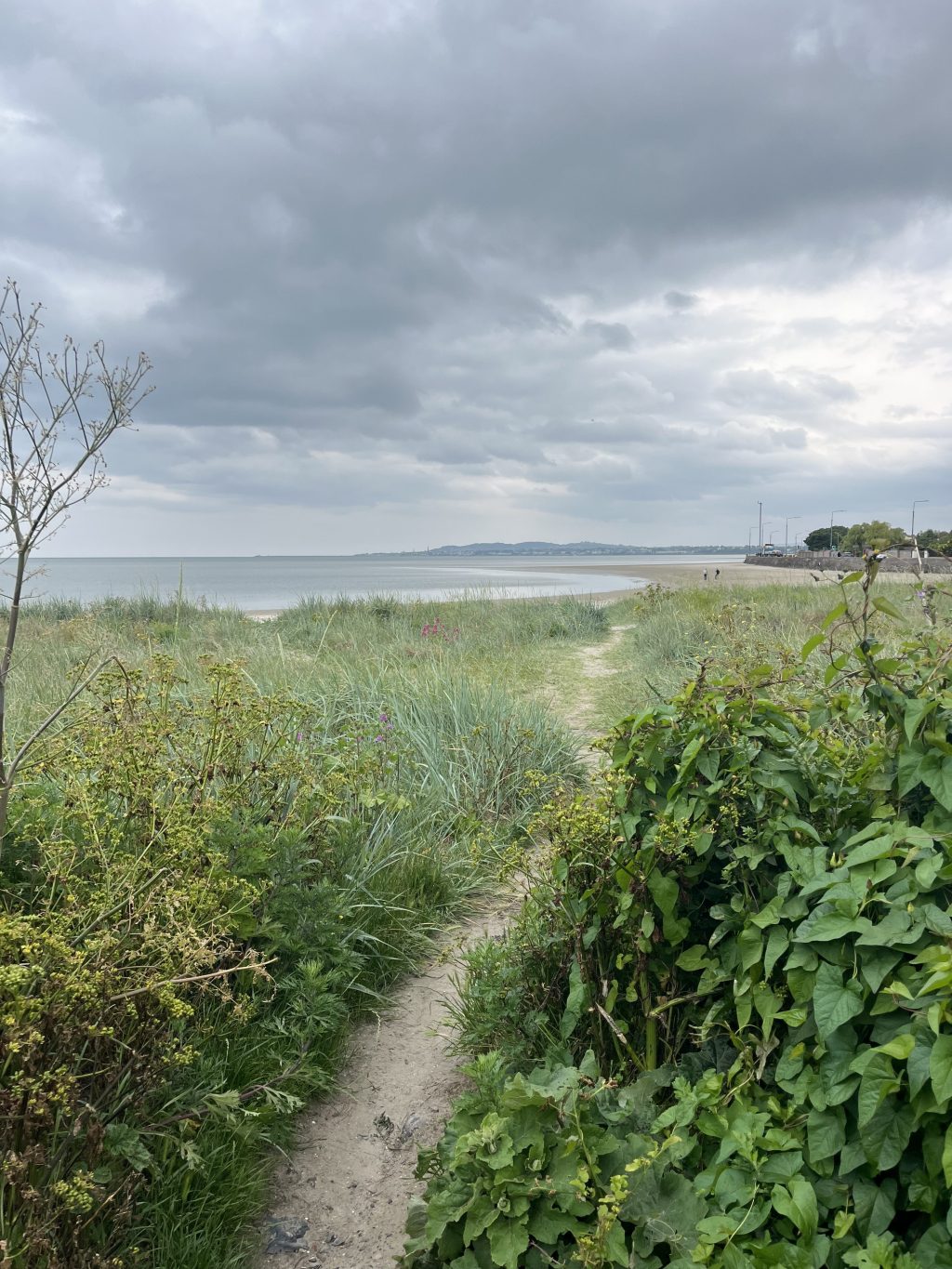
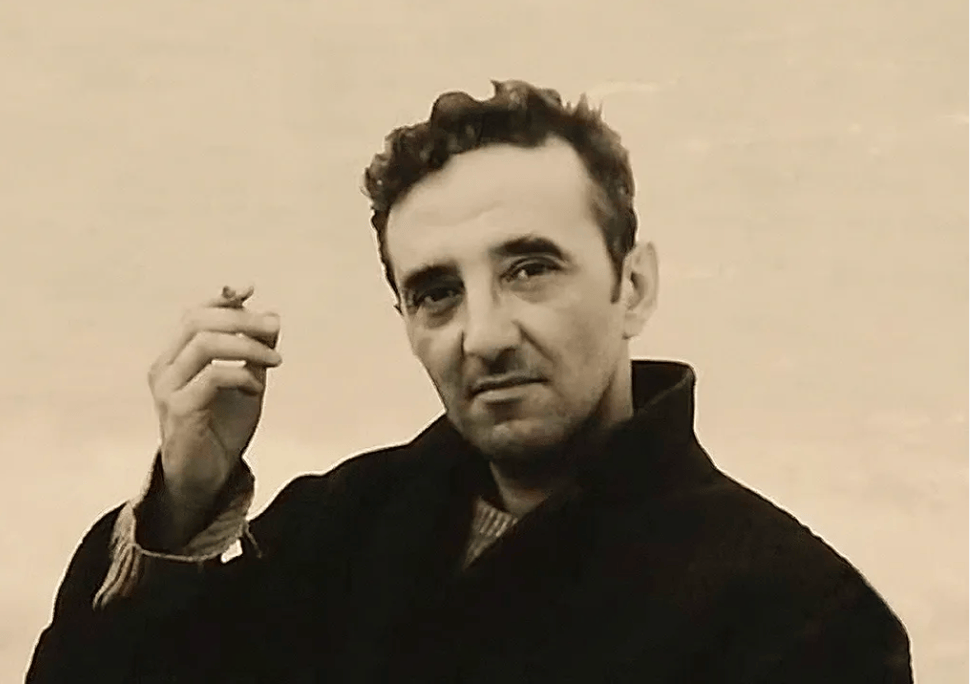
  • Human Dignity in the Grapes of Wrath

    Human Dignity in the Grapes of Wrath

    The young woman pulls the starving man to her milk-full breast. 

    The young woman, grieving her still-born child, pulls the starving man to her milk-full breast. 

    The young woman, who has been abandoned by the father and left to birth a lifeless child, pulls the dying man to her breast and fills him with the milk to surpass death. 

    She has lost her home and been forced into a constant migration up and down the coast of California in search of work, in search of life. She has feared the death of her child who may be smitten by the Lord for her own wrongs, should she dance and hug or feel too much joy in a time of death. She has been broken and her life fractured into pieces with no opportunity left except an antique, faded dream, and yet she pulls the starving, dying man to her milk-full breast and offers him a second chance at life to surpass death

    The woman here shown gives the man salvation. At the cost of her body and social dignity, she has become his hero, offering him further life. Despite the death of her child, her body can still give life to another man. Despite the end of her own family, another will always emerge in a constant display of human resilience and perseverance. This image of rejuvenation from tragedy is the final scene of John Steinbeck’s famous American novel, The Grapes of Wrath. The novel follows a family of farmers from Oklahoma who are forced to move West to California due to the devastating environmental and economic effects of the Great Depression and Dust Bowl. The mechanization of farming stole the livelihood of the American farmer in exchange for mass profiteering of a single landowner. Further the intense focus on profits led to the infertility of the land from overuse and a lack of ecological diversity. Combined with the increasing cost of living, unemployment rate, and amount of homeless people, the Great Depression was a time period that seemingly condemned survival and forcibly dehumanized its victims. 

    The Joad family drives night and day from Oklahoma to California in a run-down Jalopy and only 140 dollars to their name. They follow the call of yellow pamphlets urging men West and offering thousands of jobs, but upon their arrival the allusion of the West as a land of prosperity and destiny sharply shatters. The migrant workers stay in torn, cardboard tents, while fighting over jobs that pay less than five cents an hour. With hunger growing in their stomachs, the migrant families were left with no options but labouring in fields of food that they weren’t allowed to eat while withering to skin and bones baked with exhaustion and summer heat. 

    The truth of the poor man’s suffering during the Great Depression emerges in the work of Steinbeck, and yet, despite the horror of an entire nation’s lower and middle class slowly facing starvation, the novel holds little sadness. The son returns home from prison to see his life in ruins and his family displaced from his childhood home. The grandfather dies before the family makes it beyond Oklahoma’s state lines. The grandmother dies while driving across the desert to California and the mother sits alone with her dead body in the back of the car. The young woman who is racked with fear about the approach of motherhood loses her child and her husband as he walks away when hardship strikes. And finally, the novel finishes on the image of starvation with an old man’s only hope being in a young girl’s breast milk from a child, lost. Every possible devastation has berated the Joad family and yet the style of novel refuses mourning. Suffering is accepted as fate and thus loss, poverty, and death don’t evoke tragedy, but blend in with a constant atmosphere of morbidity and emotional numbness. Devastation can be found in every corner, but to acknowledge it all would mean to give up on living life, a sacrifice which the Joad family refuses to make. 

    Rather, the family constantly searches for hope and prospective happiness. They eat a hearty soup on a hard day in the Hooverville and listen to the prayers of one another. They find contentment in one another and their dreams of the future, and in the end despite the loss of family members, the remaining Joads have each other. There’s the prospect of a new marriage and the new life that might stem from it. There’s the hope of finding more work in the coming fall. There’s hope of community amongst the displaced. The migrant family refused to sacrifice the most important thing – their humanity and dignity. Amidst hardship, their principles remain: religion, propriety, family, and hard work. Amidst the fracturing of a nation, the family fought for togetherness with brutality and perseverance they were unaware they even had. 

    John Steinbeck’s writing captures the perseverance of the human soul against degradation and hardship. He wrote a narrative that portrays the necessity with which a family chose perseverance without questioning the purpose of continuing on. Even when oppressed to less than nothing, people will always continue fighting. No group facing subversion and treachery will ever not be a threat to the dominant power, for the human spirit will always combat its oppressors and circumstances. 


    The political ramifications of Steinbeck’s work become more apparent in the various chapters which break from the Joad’s family’s experience to capture how wide-spread the effects of the Great Depression were. The narrative style switches to an all-knowing, prophetic voice which writes in a warning tone. A textual overseer writes of the Migrant families in whole as though they were a single entity. The narrator warns about the danger of those who are hungry to those in power and the desperation which protecting one’s youth can invoke. Thus, Steinbeck, in addition to writing of perseverance, makes it abundantly clear the role his writing should play. The Grapes of Wrath urges the importance of perseverance in rebellion against imposed hardship and the suppressions of specific groups. The oppressed will always riot as says the cycle of history and the persevering nature of the human spirit.

  • Good and Evil in Dostoevsky’s The Brothers Karamazov

    Good and Evil in Dostoevsky’s The Brothers Karamazov

    Fyodor Pavlovich Karamazov had three sons and an illegitimate fourth, all of whom he failed to serve as a paternal figure. Through his life Karamazov corrupted the innocence and livelihoods of his posterity through a long list of violations to morality including: the abandonment of his posterity, the hoarding of his family estate as gained through marriage, the abuse and destruction of two wives, the usurpation of his eldest son’s romantic life, and the constant disrespect for his offspring’s prospects or pursuits. Karamazov, a man who failed to fulfill the role of the father left the desire for revenge and consolation embedded in his lineage, of which four differing “sons” demonstrate the potential consequences and means of continuing on past a broken family and childhood. Dostoevsky’s novel culminates in the trying of Dmitri Karamazov for the murder of his father despite a lack of clear evidence which ends in a miscarriage of justice that condemns Dmitri to Siberia despite his innocence as revealed by the confession of the fourth abandoned and indentured son, Smerdjakow.

    The representation of a family conflict in a mass trial allows Dostoevsky to comment both on the Russian individual, religiosity within society, and the Russian justice system which social pressure and moral judgment corrupt. The court trial, written in the style of entertainment, critiques the Russian justice system and the fallible nature of witness due to social pressures for the positive representation of one’s character. The trial’s speakers seem much more concerned with their own representation than the truthful conclusion of the case. Dmitri, though by no means innocent, did not murder his father, and yet must face the punishment for it, while the actual murder’s reputation remains untarnished in death after committing suicide despite having confessed the murder to Ivan. Further, while no real evidence could be brought against Dmitri, no evidence could be brought in his defense either. Thus, Dostoevsky’s critique of the judicial system emerges. After the murder of a man, the idea of escape for the criminal was inconceivable, leaving the people searching for the culprit of which there were only two options, Dmitri and Smerdjakow, whom even the prosecutor claimed to feel poorly accusing. Neither man had an alibi and had access to the manor on the night of the murder, which despite not proving either as murders created an infallible suspicion. In the end, Dmitri, who undoubtedly appeared more suspicious considering his frantic and insane manor, bloody, fights with his father, and public reputation as a scoundrel, faced conviction. While in most circumstances the conviction of a man known to beat and threaten murder to his father seems reasonable, the case was complicated by Smerdjakow’s confession. He admitted to Ivan that while Dmitri had beaten his father he had never murdered him, a claim he confirmed by admitting to his own murder and robbery of Fyodor Karamazov, the father that abandoned him. However, the revealing of this claim in court was written off as insanity in Ivan in response to the stress of losing a family member and watching the trial of his brother. Confession was overthrown by the guilt insulated by convicting a dead man to a murder and thus, allowing the murder to go unpunished. 

    Given the circumstances, a truthful conviction seems impossible. The Karamazov family’s affairs were beyond complicated as well as beyond immoral, so much that no one brother remained unscathed from the tumultuous spirit of the Karamazov name. The entire case was shrouded in obscurity and conflicting stories, as well as supported by evidence that was often disproven. And yet every viewer’s opinion was absolute. The women wished for Dmitri’s release, likely due to his flirtatious nature that enticed him to them. The men all wished for his conviction to punish his cruel murder of his father. A case with no clear truth or absolute outcome placed a determinedly innocent man in prison for the rest of his life due to blindness by a society obsessed with justice through condemning evil. Likely such strong opinions emerged from the immense valuation of one’s character and intelligence. Every member of society determines themself to be right while fearing saying or doing the wrong thing for being labeled a scoundrel. It is in this environment of intense convictions that a polarized community falsely convicts a man, leading to the notion that Dostoevsky’s real critique is of the allusion of truth created by social conventions. When the preservation of reputation overpowers morality and truth, a society loses sight of actual good and evil, a point further provoked by the lack of innocence in the entire Karamazov family. Thus, it is not that good and evil no longer exist, but that the complication of modernity makes their recognition almost impossible as every individual is composed entirely of both. 

    While Smerdjakow completed the final murder, Dmitri still beat his father, Ivan still left town in hopes that Dmitri murder Fyodor, and Alyosha ignored his spiritual superiors warnings of a darkness in Dmitri’s soul that would lead to violence. No member of the corrupt family maintains total innocence in the affair, and yet only once faces conviction and only two’s names are mentioned as suspects. Thus, the court system, in addition to being unreliable, fails to encompass the entire banality of evil for only the illegal is condemned by the law and not the immoral. While this is not to say that Dostoevsky believed that morality should be used in the implementation of governance systems, he clearly saw a lack of protections against immorality within governing. Not every criminal is evil, while not every innocent man is good. Thus, the actual action of punishment fails to show the righteousness of a character, despite its role in a society obsessed with the outward portrayal of morality. 

    In addition to praying the limitations of the justice system, Dostoevsky’s novel also strives to determine the actual meaning of what good or evil is in existence as well as if any person is actually good. The closest representation of goodness in his work is Alyosha, but like everyone else Alyosha has faults and isn’t the perfect idealistic monk that he wishes to be. He, follows a religion on which other characters cast doubt and believes in his own righteousness, and yet never condemns his seemingly guilty brother or anyone for the murder of his father. In fact, Alyosha never shows any grievance for his father, focusing instead on an ailing boy and his own spiritual pursuits. A novel which condemns the murder of a father by his son offers no condemnation of the neglect of the same father, nor any punishment for the father who neglected his children leading to such a circumstance. The only concern is the upmost crime of murder with no consideration for the others. Were no murder to be committed abuse and interfamily conflict would have gone unobserved and even during the case the family’s circumstances are only mentioned in Dmitri’s quickly ignored defense. No one individual is inherently good in Dostoevsky’s world, but that does not mean that he supports the nihilistic ideal of good and evil not existing. Rather, Dostoevsky sees people as complex beings who all participate in good and evil acts. Dmitri, who beat his father, also offers the peasantry handfuls of money, has a reputation of honesty, and feels immense guilt for a past theft he committed. The character who Russia views as evil clearly isn’t just evil, but a person, showing that while the idea of good and evil isn’t non-existant, that it also doesn’t encompass the individual as no one person can be defined by a single category. 

  • Coast to Coast

    Coast to Coast

    From the striped plateaus, burnt red by western sun,

    dull blades of sandstone carved by the ocean’s hands,

    scattered with green spruce, firs, and dried sagebrush,

    and waterfalls trickling down slick stone bands,

    where I watched horned goats pounce on vertical cliffs 

    and climbed cave-bound rockslides in the dirt cloud’s midst. 

    From the Pacific’s rain-steeped tea of salt and mountain air 

    brewing fresh sprout lichens on cedar bark,

    where deep green mountains basked in sheets of fog,

    obscuring the ever fading horizon line,

    where I fed seagulls at the pier from dirt caked palms,

    and learned to sing to pitch with cawing birds.

    From the moss and willow strung foliage of the south,

    draped arches over murky green canals,

    swarming mayflies evading lumpy frogs,

    algal blooms coating the surface of the deep Bayou,

    where alligators basked scorched on flattened grass

    and I found adventure, swimming under docks.

    From the snow coat hills of the frigid north, battered

    by icy wind that buried broken life,

    with only oak and pine to counter the constant white

    until yellow buds explode in spring’s first breath

    where deer leave hoof prints in fresh snow each dawn,

    and I cleansed the Earth’s dirt lodged beneath my nails.

    From the east’s walls of trees that locked away the sky,

    but crumbled where the world met the shore,

    warmed by gulf storms rippling up the sea,

    waves disappearing behind the curve of the Earth,

    where sea birds dipped where the sky met the sea, 

    and I wished to wander forever, in distant depths.

    From the flat, muddy banks framing the Mississippi, 

    encircled by cotton fields, bordered by twig-like trees,

    where flowers bloomed duller each spring,

    basted in ship’s gray fog,where cranes 

    stood on single legs, submerged in puddled fields,

    and I left the caravan that carried me, to journey on my own. 

    My roots are sprawled and broken, ripped apart in shifting ground,

    grasping on to rocks on mountain tops,

    nourished with the sea of forest air,

    shouting, stretched in webs and moss,

    burying into snow until the season’s thaw, 

    forever fighting towards an eroding shore,

    and severed in the muddy flats that were never home.

    My roots are crawling, wandering to the world’s end,

    and maybe one day they’ll dig in deep,

    to find the ancient soil down below.

    Perhaps one day they’ll tie me home,

    but for now I’ll wander everywhere

    to see the world’s hidden coves.

    I’ll wander everywhere and travel coast to coast. 

  • That Moment

    That Moment

    The lights dim. The music starts, some sort of song specifically engineered to release Oxytocin into your bloodstream. The camera pans up and down the actor’s bodies as they hold their noses close enough to brush and yet, never kiss, as if that single touching of the lips would suspend all the suspense that the filmmakers dedicated hours to making. Hollywood has boiled romance down to a scientific art. They make a grand declaration or sacrifice—run across an airport, blare a radio beneath their window, apologize for every thing they’ve ever done wrong—and then softly they whisper, “I love you.” And just like that the adrenaline races further than it did before. It’s the moment of perfect intimacy that some directing genius dedicated their life to manufacturing, in a single film shot of a camera lens. It’s at this moment that they look in love, the most vulnerable, and so they do what everyone wants. They explore and taste and roam with their eyes sealed shut and their breath heavy. They learn each other in the most physical of ways, and the audience is meant to swoon at their filmed consummation.

    No one has ever told me they loved me. No one has offered me any heartfelt speeches, but I’m no stranger to physical vulnerability. That’s all they ever want, to touch, to taste, to try, to roam. The bed sheets crease and the room grows hotter. Two bodies entwined and yet, every time I fear that if I touch too soft, or look too high that they’ll pull away from me. I know that’s never what they want, for me to promise that I love them, to tell them that I care. We’re just bodies, and this is just life, and we’re just having fun, so who fucking cares.

     I’ve never seen my parents kiss, but I’ve seen my father hold my mother. The way their bodies molded together, two individuals not yet defeated, holding each other together. He held her hand and brushed her hair from tear born eyes. He softly kissed her forehead, soft and sweet and nothing more. I want someone to want to hold me, to touch my hair because it’s soft, to kiss my cheek or nose with no intent of wanting more. I want them to hold my soul within their hand and to feel as calm as she did when he held her. It’s the kind of moment that would never make it to the Hollywood screen. It’s boring and tame, perfectly mundane. No one writes that they want to be held. Everyone just wants to be loved, but for me, I think to be held, just once, would be enough.