Molasses drips from the girl’s tongue, a sticky mess of bitter sugar and orange marmalade. She lied when she said that she would date him. She had lied when she said she would not. Everything she has said is a lie that drips and then clings to her fleshen tongue.
It wasn’t that he was unattractive just as it wasn’t that he particularly was. Only she felt drawn to him in a peculiar way that made her stomach twist and her brain decompose to a slovenly, inaccessible thing. It is what every novel has warned her against, this feeling that starts as something magical before surmounting into total destruction. Beauvoir, Elliot, Woolf – they have all issued her their warnings. A man always holds the promise of destruction.
Avery stares out the window of the language classroom. The sounds of the bus stopping and starting, the whirring wheels of bikes,the constant chatter on the street all float into the room. The windows are far too old to keep much noise out, and so every tone worms its way into the decaying wood and distracts her from the lecture. It isn’t a particularly interesting lecture, but just another too rapid summary of German grammar principles that the girl has already studied long ago. And even if she has yet to master them, she can not force her brain to concentrate upon the lecture.
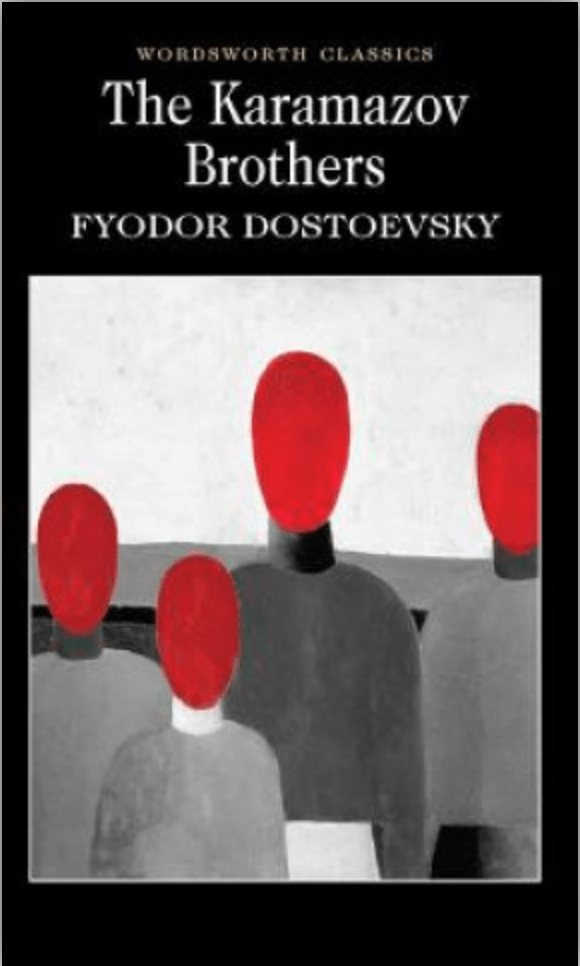
He approaches her under the tree. Her afternoon has been a relaxing oasis of security away from the noisy streets, entirely restricted to the occurrences of her book. It does not matter that her exam is later this afternoon or that she misses home after months away. Her world is composed entirely of Jude the Obscure and the trials of marriage or not marriage in the late 1800s. Of course Jude should not end up with Sue, she thinks. Sue is a monster, a selfish and insignificant woman. Unworthy, she thinks. Subjugated, she corrects. She wonders if she too is that, a woman who has the power to destroy a man. She wonders if her actions can truly hold that kind of consequence. She wonders if she will herself be crushed by romance.
“Do you mind if I join you?” he asks. He sits down without waiting for her answer and they begin to talk about literature.
“Politics have destroyed literature. What if I just want to like something because of the way it sounds or how it feels – no post-structural, post-colonial, post-patriarchial, post deconstruction. No theory, no thinking, just emotion!”
“But what if literature could change the world?”
“When has it ever? People learn about oppression, and they forget. It’s not easy to live always when recognizing that things are bad.”
The boy and girl bicker about the purpose of books underneath her tree. He approached her, and asked what she was reading. He told her she was pretty, made her laugh, kissed her when least expected. He did everything right, and the rest is history. Together, they bicker beneath the tree.
“You read for pleasure and I read to try and change the world. Those are two inherently different things” she says.
“But how have you actually changed anything, and what have you missed while trying?”
“And what has the world missed when everyone thinks and acts like you?”
“Like what?”
His eyes bear into her own. They’re warm, inquisitive, intense.
“Like nothing’s worth fixing.”
“And when did I say it’s not? Finding something futile and finding something pointless are also two inherently different things.”
“Avery, wenn benutzt du die dative Kase?” And her reverie fractures, and the boy disappears.
When the class finally lets out, she hurries from the room. Her legs ache from sitting still all day, and her mind is bored with repetition. The repetition of words and tenses long since memorized, but covered over and over again has left flying creatures buzzing in her mind. She can read and understand a German novel, but it is still hard to order her morning latte with oat milk. Hafermilch, she practices every time before she enters the coffee shop. It’s just one word. She orders einen Kaffee mit Hofermilch. Tomorrow she will try again.
The last time she was at this cafe, she had seen him, and now she wonders if she’ll see him again. Whether they will both attend the same poetry reading while sitting in the same seats as they had the last. She wonders if he’d try to brush her hand with his or recite his own work, something he’d later tell her that she had been the muse for. A repeating series of bad artworks from passionate admirers who never reach fruition are now left to rot within her wake. Reverie, a poem about a bee, letters emailed from the south of Germany, a song he will not sing.
The water laps around the middle of her abdomen. The cold shocks her skin with every wave as she struggles to lower herself into its turquoise depth. Seaweed laps around her ankles and she shivers from the cold. It doesn’t matter that it is June and the sun bears down on them all with fresh wrath. The alpine lake will always be frightfully cold. The temperature shocks her system to awareness-a pleasant feeling. She is more awake than she has been in years.
Beside her floats a different man. They splash through the ice-cold lake until their toes turn blue and their shoulders curl inwards from the threat of hypothermia. He stares at her in her swimsuit which leaves nothing to the imagination, blue and floral, tight and blue. Nothing can describe the look in his eyes but total captivation. She is the real life manifestation of his dreams. She has nearly ceased to be.
Together, they lay out on the grass and wait for the sun’s rays to dry them until they’re warm.
He says, “I always wanted to be an actor, but I’ve only recently started trying. Meeting you, it’s like all of a sudden I know what I’m meant to do.”
“But how can all of this be because of me? I only just met you.”
She had only just met him one time in a bar, just as she had only met the man the one time beneath a tree, and the rest is history.
She drinks her coffee and thinks that everything is just a repetition. Every declaration of love follows the pattern of another and every text regurgitates the structure and tone of their predecessors. Brahm Stroker’s Dracula became the German Nosferatu became the 2024 horror film while the Odyssey became a legend became Joyce’s Ulysses became Sally Rooney’s Intermezzo became the story of our collapse. One boy learned to love while he was still a child and then offered every girl he met a childish, self-possessed version of himself. Repetition is a tiresome thing.
A slamming plate wakes her once again. The balcony is full of students pretending to work while truly just enjoying the autumn sun. Stylish clothing from the thrift store, computers with post-it notes hanging off, and scattered pens – they have perfected their everyday aesthetic. The girl leaves and ventures to the park. The sounds of birds and water flowing penetrates above the city’s noise pollution. It is almost enough to imagine oneself to be anywhere else but here, any place where birds might cry or water might flow.
She begins a new novel after finding a spot beneath a tree. This one is about a boy who steals a painting when his mother dies. The premise is tragic, but the girl does not cry or feel any plentiful emotions. She is far too distracted to appreciate this work. Until you hear from me next my dear. The Akkusativ is for direct objects, and I think I’m falling just a little bit in love with you–you. who? you.– You have the voice of a professor. My rent is due. I swear we never slept together. But you used the wrong tense because slept implies never in the entire history of past tense, and I know where you were last fall. She wants her brain to stop, but her brain will not stop. The little boy deserves more attention than this, but all she can give him is the same they gave her. She reads the second paragraph for the fifth time since sitting down.
She has been in this foreign city for two months now. It doesn’t seem like a long time, but two months is enough to travel to at least seven other cities, to lose your heart to a foolish boy, to read about eight books, or nine if one is fast, to complete half an English course, or to plan a thesis that one might not ever actually write. When broken down into small portions, two months becomes a direly long time.
When she arrived, nothing could keep the excitement from her face. Her eyes darted from old Fachwerk house to old Fachwerk house–ecclectic German architecture preserved and unharmed by war. The streets were cobbled. One had to be careful walking so as to not trip on the ancient stonemanship. By the water was the spirit of a German writer dwelling in his yellow tower. Avery imagines him longing to feel the rushing air and water as it courses through the grove. Books and vintage stores with more old texts. The pages yellowing with time, the font that old, German kind. Avery arrived with perfect expectations which the historic scenery has brought to fruition. Only then time passes, and then time passed. Time passed, and the destination became just another place full of people she could not talk to and full of questions she could not answer.
Avery sits beneath her tree and waits for the boy with the quickness of tongue and the sureness in himself and them.
Across the lawn a dog chases a ball. The dog is golden and dances with the wind. He flies after the ball with fervor, his long coat rippling as he runs, his bark soaring outwards on the wind. For him, there is only a ball to retrieve and an owner to bring it back to. There are no insurmountable questions or worries or boys. The ball makes the dog happy, and so he is happy. What does it mean to be happy?
“Do you mind if I join you?” he asks. Only, it is not really a question.
He is Kurdish and handsome. Dark hair and piercing, silver eyes. They continue their dialogue on literature. He recites:
Seit ich sie verloren hab’,
Schafft’ ich auch das Weinen ab;
Fast vor Weh’ das Herz mir bricht,
Aber weinen kann ich nicht.
“Listen to the way the syllables dance, and tell me you have never felt the same. Tell me you do not feel the soul of Heine as you hear the clatter of his pain: hab, ab, bricht, nicht–such tiny words infused with so much.” He waves his hands in excitement.
“But have you not heard of a broken heart an uncountable amount of times. It would be far more interesting to ask which writer has not used these words. Tell me about a broken heart without a single cliche. Now that is something I could like.”
“And how could something that has worked for centuries actually need changed. The writers from the 1500s on all wrote of broken hearts, for what other way is there to describe such pain. You can say the heart is a wilted mess of life, a crippled child, a lost angel, and yet none of these phrases communicate the urgency of a broken heart with such specificity.”
The girl does not answer for a moment, not out of aggravation or confusion but rather the need to think. She stares across the park and her unread novel. She fiddles with the straw of her coffee cup.
“When I had my heart broken–truly broken–I could not breathe without panicking for days. I was on a precipice. Either total breakdown or numbness, and one was far easier than the other. My soul was ripped from my body not because of grief, but because I forgot to live, to eat, to breathe. Now tell me, how a single syllable can ever hold the weight of that.”
The man did not answer, but he took her hand in his and squeezed.
“The other night, when we were on the swing. You mentioned having once been in love?” Avery asks.
He had said it with such earnestness that she had not dared ask in the moment. They were sprawled across a circular, hammock-like swing, swaying in motion with the evening air. Between them sat a bottle of wine that they had both left long untouched. She could not see his face in the moment, or else she might not have restrained her questions. They were both entitled to their secrets, she thought. They continued to bicker about literature until he asks:
“You remembered that?”
“Neither of us were that drunk.” she says.
“It was years ago.”
“I still want to know what happened” she says.
This conversation could be normal, the usual introductions which every new relationship requires. They tell each other about all the scars from others in their past and try to hold each other in a way that doesn’t touch on former wounds. Only that would require that anything about this conversation be normal. That would require her to want to date him or him her. That would require her to not be scared of him, to not feel her nerves writhing in alarm at his presence all the while her mind was flattered by his attention. She waits for his answer in anticipation. Perhaps he killed her or perhaps they had parted ways after he had yelled too loud or gotten too angry when another looked her way.
“We were engaged,” he says. This surprises her. She is only twenty. Marriage seems unbelievably far away.
“We were engaged, and then she left me. She left me because I couldn’t pay her bride-price.” This also surprises her. He too has been hurt. He too might only be hard because of a past that she can not comprehend.
“I haven’t felt this way about someone since her, until you,” he continues. This, she does not understand, but she continues to hold his hand as the molasses pours from her eyes. Then she is thinking about him again, the boy from her past. She sees him swimming in a reminiscence that is far more graceful than he had actually been. She had made him an actor, but he had made her a writer. Only, now she was too far away trying desperately to forget. Recalling him makes her tired. She is tired of wishing he would come back. She is tired of missing him. She is tired of him. Until you hear from me next, my dear. She yawns from the effort of remembering.
She yawns and then her cheek stings. Bright, tingling red. She watches him lower his hand.
In 1964, Michael Foucault published Nietzsche, Freud, Marx. The three greatest thinkers of the 20th century, each presumed German, each responsible for destabilising thought. A French theorist writing pages upon pages on the words and thoughts of two Germans and an Austrian. His conclusion: every interpretation is just an interpretation of another interpretation. The girl felt a sharp sting. She saw a hand fall. She makes an assumption. He has slapped her, and immediately she thinks that is wrong. Only, did Freud not indicate the possibility of her own hysteria being the reason for her emerging shock and anger? Did Nietzsche not prove that there is no such thing as right and wrong? Had the instability of the 20th century not shown that everything we think and know is wrong?
The girl is confused.
She misses home, she thinks. The classroom walls are empty. She has no friends in this foreign place. There is no such thing as right or wrong. She remembers the first funeral she ever went to and the old, snake-like woman twisting her into her decrepit arms. The casket was open, but her grandmother did not look the same. She was bloated and pale with pale pink lipstick smudged across her bludgeoning lips. In less than a week, death had made her corpse unrecognizable, an imposter pretending to be her grandma. She would wake soon enough, Avery thought. She would wake and head to her favorite place to make her favorite cookies–chocolate chip with extra salt. Only, the cookies would taste all wrong. The cookies would taste all wrong and then her hugs would be different too, less firm, more pinched. Avery does not want this version of her grandma to wake. She does not understand what has happened to her grandma’s body. She does not understand why everyone is acting as if nothing is wrong.
He continues talking about his ex-fiance. He asks why she is not paying attention. He takes her hands and pleads for more. Her eyes are dripping with molasses. She is hysterical.
She has talked to no one else this long since arriving in this foreign city. Guilt grabs at her like smoke.
An interpretation or a way of seeing the world, she thinks. How can perception feel so assured when everything is just interpretation without strict worldly bounds? This city was settled in the sixth or seventh century. No more exact information exists. In 1078, the castle was marked in print and in 1231, the city was officially recorded in print. Therefore, is 1231 the beginning? But what of the centuries of peasants and lords building stone walls, intricate church architecture, and reshaping the way the water flows through land? Without the stringency of officialness, do they cease to exist?
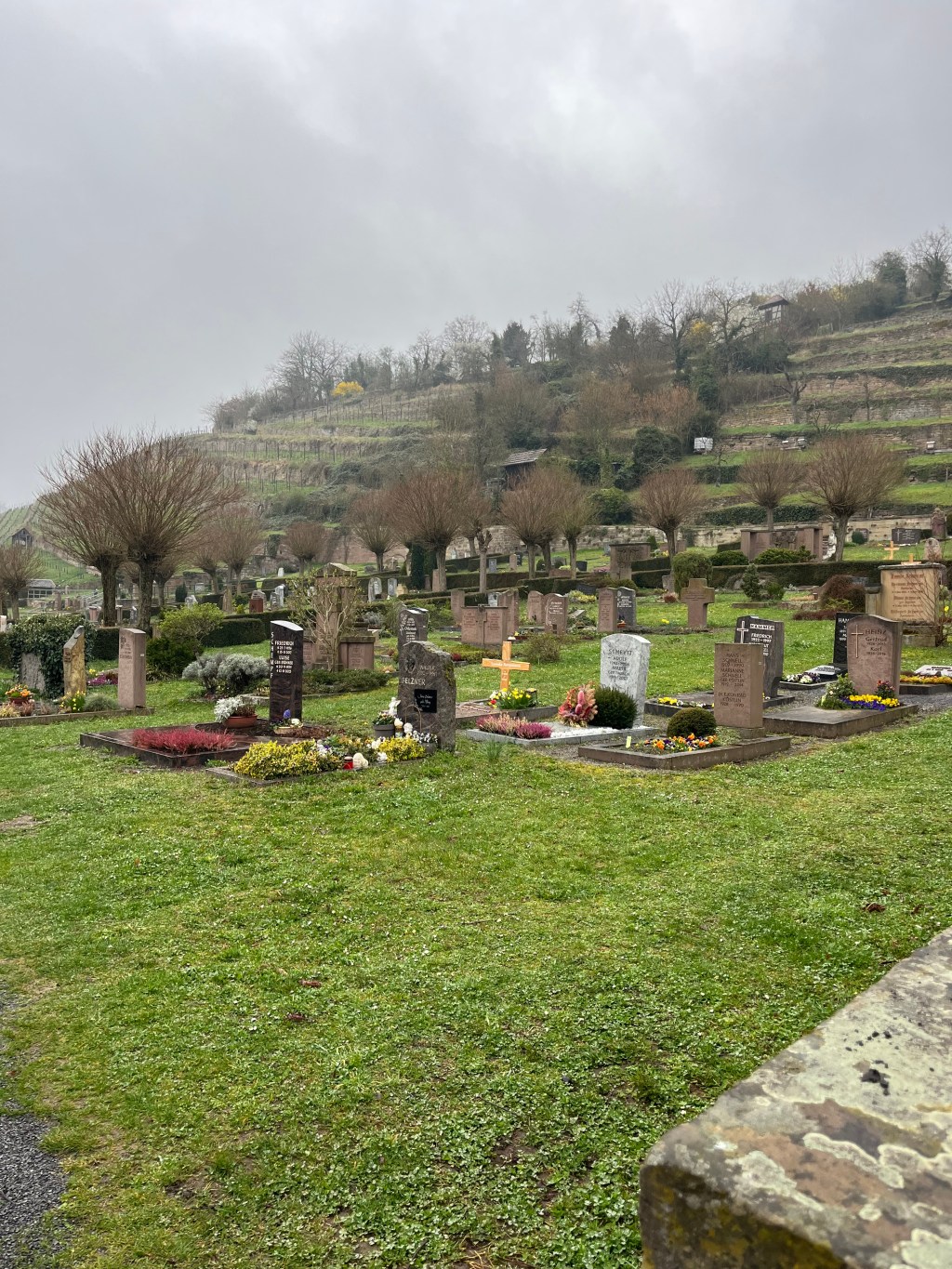
Just two days past, she meandered through the graveyard. There were withered tombs and unmarked graves. One she noticed had lost its dates, the name of whom it sheltered, and almost every mark of decorative engraving. She pondered when it might have been from, who might rest beneath her feet. It did not seem illogical that this man or woman or child or pet could have existed before 1231. Perhaps there was never even a name on this tombstone at all, for who that lived before 1231 could possess a name worthy of remembrance.
His voice startles her.“I bought myself this ring as a promise to myself. After her, I would never love again. I would never be hurt like that again. This ring is my reminder, but now I want to take it off,” he says.
It is wrong for a man to kill another. Just as it was wrong for him to slap her. So many things in this world are wrong, so much so that half of our worldviews are based on deadly sins: gluttony, sloth, greed, lust. The list is unending. Sex is wrong and flirting too. Lying is wrong, unless it’s in the name of good. Only who then gets to determine what is good? Good can be seeing a turtle floating on the side of a pond or killing the same turtle for dinner. Good can be protesting the construction of AI data centers or getting a promotion. Is it good when an employee at a data center gets promoted?
Can heartbreak be good? Can slapping be good? And what is this obsession with being good? She tries to think logically, but she is distracted by his lips travelling up her thigh. It is dusk, most people have already left the park. Her face is hidden in the shadows of the tree she leans upon. He stares up at her, calls her love, lays comfortably between her too thin thighs.
Logic, she reminds herself. His fingers move in light, circular strokes. Her face stung. She remembers something about molasses. His hand lowers, but she is no longer sure it was even his hand. A face can sting for many reasons: a bee sting, a spontaneous muscle ache, a phantom pain. The molasses is dripping from her eyes. His lips push against her inner leg. His teeth brush against her skin just below where her skirt is pushed up. Logic, she frenzies. He had told her that he grew up with his grandmother and mother pinching or pulling or slapping his cheeks. She had grown up in a house. His hand is getting closer. “Be quiet my love, or someone might hear.” In his culture, he is rebellious. He does not pray to Allah. He does not make his sister wear a veil. He is an outcast for his cultural rebellion. His fingers brush across her secret place sending shivers through her spine. “I can feel how wet you are, my love.” He sinks his teeth deeper in her thigh. Heathcliff was never a “good” lover, but he tried his hardest to protect her. He hit. He screamed. He roared. But were these animalistic qualities not in her defence? Jealousy is just an expression of possession. Possession is subject to interpretation. Is it good or evil? Avery does not know, but she feels his fingers slip between her fold and press warmly inside of her. This feels good. Being human feels like something good. His fingers move in a well choreographed rhythm. He is not new to this game of seduction. Logic, she protests. “Faster,” she moans. Every profound spirit needs a mask; nay, more, around every profound spirit there continually grows a mask, owing to the constantly false, that is to say, superficial interpretation of every word he utters, every step he takes, every sign of life he manifests. She likes the darkness in this man, likes the way his fingers move, the indent of his teeth upon her thigh. I do not want you, she thinks and molasses pours from her eyes. Catherine was richer and smarter and kinder than Heathcliff, but he made her feel alive. In and out. His teeth graze her clit. “God,” she cries. Logic, she demands. But how can this be wrong? In and out. Good does not exist. How can this moment not exist? Did he use his fingers like this on other girls before? “Be quiet, my love.” She moans. She writhes. And when she climaxes, it is as if nothing exists at all.
His fingers remain pushed deep inside of her. Her breath is unsteady. Dirt is lodged beneath her fingernail from where she squoze the earth. Their eyes meet in a direct confrontation. Neither one of them seems to understand what has happened. He bites his teeth into her thigh and pulls his fingers out. He smirks at the mess he has made her into, panting heavily at the base of a public tree. He softly rests his palm against her cheek. He says, “Now tell me, that a single syllable can not hold a novel’s worth of weight.”
The logic returns.
“You should not have slapped me.”
He protests. He says it was no big deal, something that is normal. He claims it is because she yawned. People should pay attention, and she did not. She was not paying attention. Only now she is, paying attention that is. She is thinking, and she knows everything about this is wrong even if nothing can ever actually be wrong. There is no such thing as good, and there is no such thing as evil. And yet, what he had done was wrong, and to say anything else would also be wrong.
Wrong. One syllable. Different according to philosophy, culture, religion. By any logic anything could be wrong only to be heroic somewhere else. That fascist dictator is someone else’s king, and the troublesome criminal is just a working father. Avery wonders if it is true what he says about slapping one’s cheek being a means to show affection. To her that seems implausible, but Avery has never been to Kurdistan. Avery has never been anywhere beyond the western hemisphere. Is it racist to be upset or racist to not? Is she gullible? How has she survived while being this ridiculously naive?
“I’m sorry,” he finally concedes. “But surely you must know that I would never try to hurt you, my love.” His voice is sincere, almost impossible not to believe.
“Stop doing that.”
“Doing what? Apologizing?”
“Calling me your love.”
“But I love you. Do I not?”
“You can’t love someone after just two weeks.”
“And there you go again.”
“Me!”
“Yes, you! Why, you seem to think that nothing can be right unless it’s in your world view. Literature is for politics and revolution, war is always evil, coffee can not be good when mixed with the grounds-Turkish coffee is made with the coffee in the grounds-the romantics were just that, romantic, lazy men who liked to think and dance with nature, slapping is wrong and yet when you shove me that is no harm done.” His eyes are alight with the pleasures of debate. HIs gaze is unsettlingly fierce, yet captivating. “You say I can not love you, but what else can explain how I feel but that one word. One small syllable to carry the heaviest weight of my life.”
“But that’s not love. Obsession maybe, but never love.”
“And with those words you might have broken my heart.” He clutches his fist dramatically to his chest.
She smirks, is more composed now then she was before. “For so much weight behind those words, I would think you’d look more pathetic.”
“How can you say that, that I am not broken, that you have not treated me cruelly.” He speaks with his arms waving vibrantly about. He is a lone actor filling up an entire stage.
“For you have yet to prove that you can cry.” She says it matter of factly, her usual sarcasm absent. “And because you slapped me.”
He grasps more fervently at his chest. He lets loose a boisterous laugh. He cries, “You wound me, my love.”
They are at an impasse. They are two individuals who are fundamentally different.
“You don’t love me.”
“Yes, I do.”
“How?”
“I don’t know how. But every time I’ve known, I haven’t actually been in love.”
“You love me because you don’t know what you love about me.”
“Exactly!” he says. Avery does not understand, but she’s not sure he does either.
“Do you not?”
“Not what?” she asks.
“Love me?”
And then her tongue is dripping with molasses. She thinks, perhaps it would be better if Nietzsche had never thought at all. She needs someone to prove to her that this is wrong, that his mouth runs on the fuel of pretty lies. She needs to believe that anything at all is wrong, that anyone at all is good. She thought that of someone before, but he left her drowning in shallow, turquoise water. Until you hear from me again, my dear. She is drowning in molasses.
“I already told you. You can’t love someone in just two weeks.”
“Then explain the way you look at me.” And when she does not answer, “explain the way you act around me or the way you hold my hand, the hours that you speak to me. Explain any of that at all as something less than love.”
It is sickly sweet and choking her. She does not know what’s true and what’s not. He slapped her. She loves him? She hates him? She wants him all the time. If there was such a thing as evil, he would be an evil man.
“Tell me that you love me.” Only, it is not a question.
She stutters over empty breath, but no sound comes out. Her throat is clogged with rich and thick molasses.
“It’s okay,” he says. “I know you love me too.”