Tag: Literature

  • Marcel Proust – Swann’s Way and Exclusivity

    Marcel Proust – Swann’s Way and Exclusivity

    In the final pages of “Place Names – The Name” the narrator watches the mother of the young girl whose name fills his every waking moment ever since their chance meeting at the Champs-Elysées. Her name is Madame Swann, and she is stylishly dressed, alone, and meeting a unidentifiable man dressed in gray. Priorly condemned as morally scrupulous by the narrator’s mother, the scene of the woman going out to meet a man other than her husband incites intrigue and suspense. Has Swann truly found two separate and equally unfaithful women or has he succumbed to the love of the first. The women’s name is Odette, and she is the woman who has tormented and cheated upon her lover for years, all the while claiming innocence with her docile and eloquent demeanor. This is the woman who the secondary protagonist of the novel, who we have watched suffer at her behest, has married. 

    The acceleration of an affair into an actual union not only shocks due to its origin but the ridiculous and cruel treatment of Swann by Odette. Their relationship began in the social turmoil and drama of the Verdurin’s salon in which only the proper opinions of art and culture and deemed acceptable, and any opposition or outside involvement beyond the circle of friends is viewed as betrayal. To know the prime minister was not an honor to the Verdurins, but an affront to their own prestige and self-conceit for offering another source of pleasure than themselves for the lives of their acquaintances. Thus, when Swann accidentally announces his lunch to meet with a head of state, he must quickly condescend of the party’s inevitable boredom and slowness which will only serve to inspire his return to the Verdurins, Odette, and their circle of friends. To win Odette, Swann must endear the members of her circle, but to do so he must also sacrifice his connections with the outside world leaving him isolated and socially dependent on his lover despite the instability and constant infidelity of their relationship. Swann therefore, sacrifices his social circles to obtain the unobtainable, the women who does not wish to be kept. Three essential claims on the nature of human interaction can be drawn from the Swann’s submission to his affair with Odette. 

    1. People want what they can’t have. 
    2. People will act in opposition to their own values and desires to please others whom they deem desirable or exclusive.
    3. The inclusion of outside ideals or identities in an exclusive community or group threatens the integrity and power of the group’s dominant ideology.

    The first is obvious. Swann views Odette as undesirable and opposed to his usual type until he manages to construct a comparison between her and ancient artworks due to their similar simplicity and softness of features. At the beginning of their affair, he holds little interest in her and only frequents the same salon as her come late int he evenings after already having visited with the barmaid who he repeatedly defines as much more attractive to him than Odette. However, one evening he arrives too late to dinner and finds that his plaything has not waited for him inciting an inversion of their positions in their relationship. The mere thought that Swann might be uninterested or have other prospects drives him to insanity as he searches for her presence in a number of French cafes and taverns. When they are finally reunited, Swann loses his prior dominance, begs to fix the flowers on her dress, and ensures that he sees to her every need initiating a dynamic that enables Odette’s infidelity and his refusal to believe or acknowledge either which protects her. Odette becomes desirable when she becomes unobtainable like the ancient painting of the Greeks and from that moment on Swann is enslaved to her whims and manipulations. The pursuit of the unobtainable cages Swann in misery that only the forfeiting of what he wishes to win but can not can possibly remedy. 

    The second rule of human interaction is revealed by Swann’s sacrifice of his own social circles and ideals to please the Verdurins. Swann had a vibrant social life and constant introductions to new women and acquaintances before he met Odette, the woman who becomes his keeper. Swann refuses the company of other, not only because all of his time goes towards the Verdurins, but because anyone whom they have not approved of becomes a stain on his reputation. In one instance, Swann expresses admiration for the intellect of another woman whom the Verdurins have never met, but his admission only leads to strict insult. His belief in the repute of a character beyond their exclusive social circle paints hm as disingenuous and disloyal for how can a man dare associate with two separate groups of individuals. Further, Swann shows a sacrifice of his own opinions to please this judgmental crown. His attitudes towards music morph into those of Odette’s no matter his prior mockery of her uneducated and disinterested reception of music. This submission to the ideals of another through which opinions not his own now govern his life depict the dangerous tendency for individuals to sacrifice themselves at the behest of others, particularly those whom they value as better. 

    The final observation of Proust’s work emerges as a constant theme in which outside identities, persons, and ideas constantly insult the members of Odette’s circle, but in the last section of the volume titled, “Name Place – The Name,” the threatening nature of things or concepts which are “other” imposes itself on ethnic identity. The story has reverted to the life of the narrator, whom many critics simply refer to as Marcel, and he encounters Swann at a party allowing for opinions of Swann’s character to be revealed beyond the notably pathetic and submissive self he shows in his pursuit of Odette. The young narrator overhears a criticism of Swann’s character in which his superfluous and rich lifestyle and character are attributed to his Jewish identity, an aspect of his character not formerly mentioned. This characterization relies on abundant stereotypes of Jewish people and serves to further separate Swann from the salon he seeks. Suddenly, the aversion to him for seemingly no reason makes an abundance more sense as the truth of his isolation being partially a result of prejudice and anti-semitism is revealed. Swann was viewed as not good enough, not due to his enunciation of independence at the onset of their courtship, but his ethnic identity which inherently separates him from the other Parisians. Further, his condemnation takes on a much darker implication. Outside ideas threaten the salon hostess, just as diverse identities threaten a white majority. 

    Thus, Proust’s text expresses a variety of themes surrounding exclusivity, identity, and desire. He does so by writing of the yearning of a bourgeois man after a coquettish woman and his pursuit of her. On the surface, the novel is a tragic romance which only reaches a more tragic end when the narrator reveals Swann and Odette’s eventual marriage, but even a brief analysis of the events of the novel evokes questions on social hierarchies, exclusivity and the dangers of dominant ideologies. The priorly discussed allure of exclusivity which provokes the neglect of personal ideas and responsibilities appears as a detriment to Swann’s own livelihood, but reveals essential characteristics of human nature. Further, these characteristics influence every facet of our lives, our culture, and our politics, making an awareness of them essential due the clearly dangerous implications and impediments to free thought that they pose. 
  • Human Dignity in the Grapes of Wrath

    Human Dignity in the Grapes of Wrath

    The young woman pulls the starving man to her milk-full breast. 

    The young woman, grieving her still-born child, pulls the starving man to her milk-full breast. 

    The young woman, who has been abandoned by the father and left to birth a lifeless child, pulls the dying man to her breast and fills him with the milk to surpass death. 

    She has lost her home and been forced into a constant migration up and down the coast of California in search of work, in search of life. She has feared the death of her child who may be smitten by the Lord for her own wrongs, should she dance and hug or feel too much joy in a time of death. She has been broken and her life fractured into pieces with no opportunity left except an antique, faded dream, and yet she pulls the starving, dying man to her milk-full breast and offers him a second chance at life to surpass death

    The woman here shown gives the man salvation. At the cost of her body and social dignity, she has become his hero, offering him further life. Despite the death of her child, her body can still give life to another man. Despite the end of her own family, another will always emerge in a constant display of human resilience and perseverance. This image of rejuvenation from tragedy is the final scene of John Steinbeck’s famous American novel, The Grapes of Wrath. The novel follows a family of farmers from Oklahoma who are forced to move West to California due to the devastating environmental and economic effects of the Great Depression and Dust Bowl. The mechanization of farming stole the livelihood of the American farmer in exchange for mass profiteering of a single landowner. Further the intense focus on profits led to the infertility of the land from overuse and a lack of ecological diversity. Combined with the increasing cost of living, unemployment rate, and amount of homeless people, the Great Depression was a time period that seemingly condemned survival and forcibly dehumanized its victims. 

    The Joad family drives night and day from Oklahoma to California in a run-down Jalopy and only 140 dollars to their name. They follow the call of yellow pamphlets urging men West and offering thousands of jobs, but upon their arrival the allusion of the West as a land of prosperity and destiny sharply shatters. The migrant workers stay in torn, cardboard tents, while fighting over jobs that pay less than five cents an hour. With hunger growing in their stomachs, the migrant families were left with no options but labouring in fields of food that they weren’t allowed to eat while withering to skin and bones baked with exhaustion and summer heat. 

    The truth of the poor man’s suffering during the Great Depression emerges in the work of Steinbeck, and yet, despite the horror of an entire nation’s lower and middle class slowly facing starvation, the novel holds little sadness. The son returns home from prison to see his life in ruins and his family displaced from his childhood home. The grandfather dies before the family makes it beyond Oklahoma’s state lines. The grandmother dies while driving across the desert to California and the mother sits alone with her dead body in the back of the car. The young woman who is racked with fear about the approach of motherhood loses her child and her husband as he walks away when hardship strikes. And finally, the novel finishes on the image of starvation with an old man’s only hope being in a young girl’s breast milk from a child, lost. Every possible devastation has berated the Joad family and yet the style of novel refuses mourning. Suffering is accepted as fate and thus loss, poverty, and death don’t evoke tragedy, but blend in with a constant atmosphere of morbidity and emotional numbness. Devastation can be found in every corner, but to acknowledge it all would mean to give up on living life, a sacrifice which the Joad family refuses to make. 

    Rather, the family constantly searches for hope and prospective happiness. They eat a hearty soup on a hard day in the Hooverville and listen to the prayers of one another. They find contentment in one another and their dreams of the future, and in the end despite the loss of family members, the remaining Joads have each other. There’s the prospect of a new marriage and the new life that might stem from it. There’s the hope of finding more work in the coming fall. There’s hope of community amongst the displaced. The migrant family refused to sacrifice the most important thing – their humanity and dignity. Amidst hardship, their principles remain: religion, propriety, family, and hard work. Amidst the fracturing of a nation, the family fought for togetherness with brutality and perseverance they were unaware they even had. 

    John Steinbeck’s writing captures the perseverance of the human soul against degradation and hardship. He wrote a narrative that portrays the necessity with which a family chose perseverance without questioning the purpose of continuing on. Even when oppressed to less than nothing, people will always continue fighting. No group facing subversion and treachery will ever not be a threat to the dominant power, for the human spirit will always combat its oppressors and circumstances. 


    The political ramifications of Steinbeck’s work become more apparent in the various chapters which break from the Joad’s family’s experience to capture how wide-spread the effects of the Great Depression were. The narrative style switches to an all-knowing, prophetic voice which writes in a warning tone. A textual overseer writes of the Migrant families in whole as though they were a single entity. The narrator warns about the danger of those who are hungry to those in power and the desperation which protecting one’s youth can invoke. Thus, Steinbeck, in addition to writing of perseverance, makes it abundantly clear the role his writing should play. The Grapes of Wrath urges the importance of perseverance in rebellion against imposed hardship and the suppressions of specific groups. The oppressed will always riot as says the cycle of history and the persevering nature of the human spirit.

  • Political Comparisons : Sally Rooney’s Intermezzo and James Joyce’s Ulysses

    Political Comparisons : Sally Rooney’s Intermezzo and James Joyce’s Ulysses

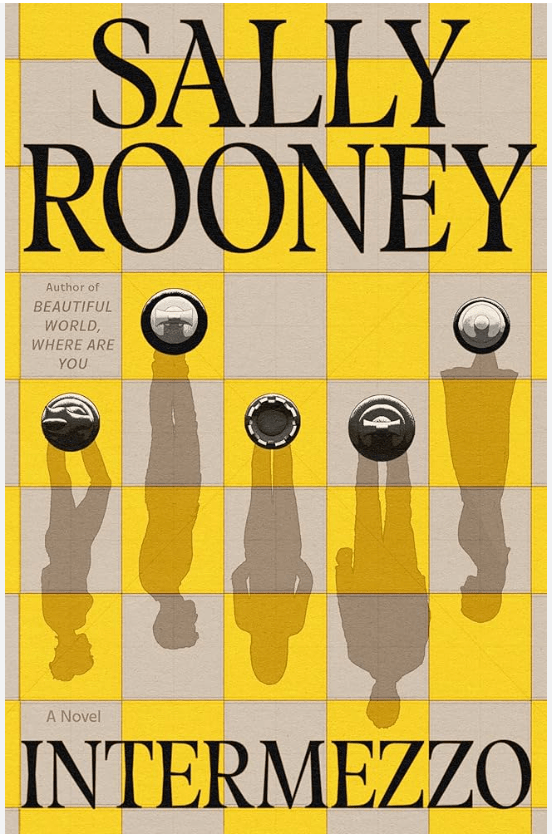
    Sally Rooney’s Intermezzo captivates its reader through confusion as they waver between sympathy and disgust or pity and spite. The novel follows two brothers, Ivan and Peter, following the late passing of their father. They seek healing in the attentions of questionably aged women and encounter questions of family and brotherhood. Rooney captures the daily thoughts and burdens of each character in first person narration that swings impossibly close to living inside another person’s mind with fracturing interludes of thought, incomplete sentences that run into one another, and forced recallings of past traumas or mistakes. The style of narration places the reader as close to the characters as the written word can manage, and yet by the novel’s end, both brothers are unknown. Their opinions of each other conflict, their opinions of themselves are revolutionized by their own contrasting valorization and constant self-condescension, and their stories are filtered through their own perceptions. The reader can only know the characters as they want to be seen unless extraneous circumstances intervene forcing the truth to emerge, and even then doubt still exists. 

    The closeness of narration mirrors that of sections of James Joyce’s Ulysses, a novel that was praised for being a mastery of the public psychology of Dublin. Leopold Bloom,  the central protagonist in Ulysses, surveys the world around him with a constant attention to detail which both transforms each scene into a fully stenciled image and offers insight to Bloom’s daily thoughts or more specifically, his being. Bloom, in his closeness to the reader, offers a truly realistic relationship in which the faults of a character can not be ignored, but also can not make them hated. The reader must follow Bloom as he voyeuristically watches women, going so far as to ejaculate on a beach while staring at a young girl or sneaking into the front section of a house to watch a woman’s ham-like rump as she beats dust from laundry. And yet the reader also witnesses moments of immense sweetness as Bloom coos at his cat, prepares his wife breakfast in bed while ignoring her impending affair, and seeks out a fatherly relationship with a drunken, young man lost in Dublin’s red light district, to reconcile his own poor relationship with his father. The polarity of these actions forces the reader to see every side to Bloom, the good and the bad, thus making their opinions towards Bloom waver between admiration and judgement.  

    It is this reality and closeness of interaction that Sally Rooney sought in her novel Intermezzo. She wrote of the world in between time, emotion, and death. This world which represents the complexities of human emotion could not be represented by characters who rely on the binaries of fiction leading to the choice of narrative style. She wrote her characters daily monologues to both obscure and present them as is the most realistic way. Intermezzo is a novel about the growth, change, and meaning within transition. The novel shows the changes brought about by death which renew individuals’ perspectives and force them to confront their own life values. Like the intermezzo of a play or an opera, infinite change can occur in the brief time between the beginning and end or in this case the time before and after the death of a father.  

    It seems unlikely to compare the work of a famous Irish novelist which depicted the transformation of the mythical Odyssey into a single day – June 6, 1904 – with the prose of contemporary Irish fiction which can be categorized as either romance or drama and spans multiple months. And yet, both novels succeed in the same goal, to write a character so meticulously and vividly that they become real. Further, both novels confront the impact or lack thereof of the father figure. Young men wander Dublin, unsure of their ambitions or desires, in the wake of the loss of the father – Ivan and Pete through death and Stephan Dedalus through ostracization. Two novels which stem from entirely different time periods and are affected by diverging social values and societal expectations share these fundamental elements – the importance of human connection as represented by the father and the inexplicable variety to the human personality which can extend both to good and evil without ever leaving either sphere. 

    Ulysses, which deals with Irish nationalism, sexism, and anti-semitism concludes with no real change or grounds for reunification in a decaying marriage . The moral lies in the acceptance of people for who they are, for their wrongs or unlikeable characteristics. Bloom can forgive his narcissistic wife for her affair and Molly Bloom can forgive her husband for his inattentiveness, stupidity, and objectification of every woman on the street. Thus, neither character is perfect because Joyce didn’t write heroes, but people. Ulysses urges the reader to find pleasures in the simpleness of life and acceptance in the imperfections of people. The work of Joyce  transforms an age-old epic into a call to remembrance of the individual within an isolating and dehumanizing society. It urges the reader to embrace diversity in response to exclusionary nationalist movements which transformed the oppressed Irish people into an entity which also oppressed its own people should they not perfectly conform to societal norms. 

    Sally Rooney’s Ireland maintains the same cold grey quality as Joyce’s Ireland. In the background lingers the death of the two protagonists’ father, divided families, and societal judgement. Pete can’t be with his first love ever since she suffered an accident due to her fear that she can no longer provide what a woman should; nor can he be with his younger girlfriend due to his fear of judgment being passed at their age difference. Similarly, Ivan, the younger brother, can’t take his relationship with his older and still-married girlfriend public due to her fear of societal condemnation, particularly by her mother. The two brothers find solace from their own fractured relationship as ruptured by grief and the trials of growing up in their budding relationships, and thus a similar theme to Ulysses emerges. The characters are not facing the isolation of an industrialized and capitalistic society, but of a family torn asunder by death, unkindness, and misunderstanding. Pete views Ivan as a perverted, sexist fool while Ivan views Pete as a narcissistic and careless, pompous ass. Their hatred of one another provides opposite representations of each character as offered by the sections they narrate, completing the images of realistic individuals inundated with imperfections. However, come the novel’s end Rooney writes of hope for their reconciliation as they plan to spend the next summer together with their respective partners. Rooney, just as the great Irish Novelist, Joyce, wrote of the need for acceptance of faults and reunification in the pursuit of happiness. The brothers will only find peace when they can forgive one another and more so forgive themselves for their own roles in their ostracization. Intermezzo, thus becomes a novel about forgiveness in the face of loss and of acceptance as a mode of healing. 

    Two very different writers from two exceedingly different time periods, one in an age of cultural divide, another an age of technological isolation, and yet their works evoke the same theme. They emphasize the pointlessness of life and the subsequent need for finding meaning in experiences and human connection. They both warn of the dangers of miscommunication or misunderstanding due to a lack of familiarity with the other that waver outside comfort. Both authors prove the essentialness of preserving relationships and  connections for the betterment of both the individual experience and the betterment of society. 

    In the modern day US, both cultural and technological division plague society. The attentiveness to actual events, legislation, and cultural movements has drastically decreased with the rise of social media all the while bias-confirming information is streamlined to everyone’s personal devices. The result is division, defensiveness, and an inability to politically organize despite the rising state of authoritarianism. In the last week alone, US President Donald Trump has both taken national control of the DC police sector and claimed that the Smithsonian Museum Coalition focuses too much on the negative effects of slavery leading to the removal of 32 exhibited items from the National African American History and Culture Museum. People in the US are divided, unable to recognize the communal wrong of such actions, and unwilling to alter their opinions or justifications due to a culture of information bias and confirmation which has corrupted the pursuit of truth, dignity, and freedom. 

    This corruption of truth has been combatted time and time again by political speakers, activists, artists, philosophers, and as has been noted in this paper, writers. Two Irish writers, Joyce and Rooney wrote novels about humanity, connection, and the importance of acceptance. While it can not be said that these writers published their works with no political motives, especially considering the known criticism of Irish nationalism as presented by Ulysses, that does not denote the importance of their lessons. Both writers wrote realist narratives that skimmed the surface of the human consciousness, a place where truth can not be denied as it floats so closely to reality. Both writers proved through their exploration of human psychology that no one individual can ever be right or perfect in totality as the hero does not exist. The hero is not human. The hero is not reality. 

    The lessons of literature seem to have been forgotten in the current political climate which neglects the individual, the soul, and humanity. Artificial institutions have usurped our freedoms, and literature offers a connection with truth and a way to remember reality. It requires methodical interpretation and analysis that can’t be corrupted as to corrupt a literary analysis would be to corrupt the human experience beyond belief. Joyce and Rooney together bridge the divide between the past and present and call for a return to critical thinking and connection, the only tools which could potentially save the world as it is. They wrote of people, thus proving that every individual deserves redemption or care, a lesson which must be remembered, even when applied to someone infinitely different from ourselves.

  • Good and Evil in Dostoevsky’s The Brothers Karamazov

    Good and Evil in Dostoevsky’s The Brothers Karamazov

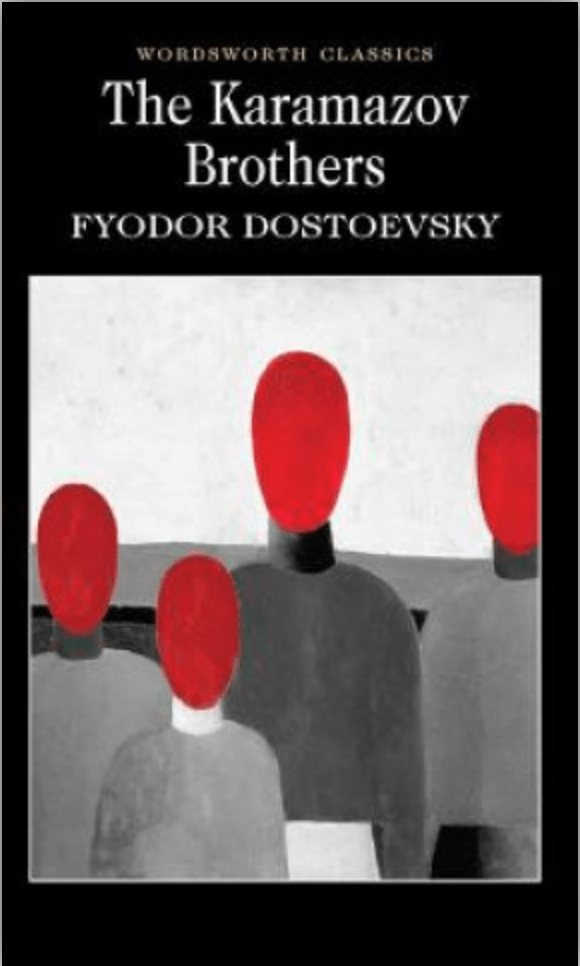
    Fyodor Pavlovich Karamazov had three sons and an illegitimate fourth, all of whom he failed to serve as a paternal figure. Through his life Karamazov corrupted the innocence and livelihoods of his posterity through a long list of violations to morality including: the abandonment of his posterity, the hoarding of his family estate as gained through marriage, the abuse and destruction of two wives, the usurpation of his eldest son’s romantic life, and the constant disrespect for his offspring’s prospects or pursuits. Karamazov, a man who failed to fulfill the role of the father left the desire for revenge and consolation embedded in his lineage, of which four differing “sons” demonstrate the potential consequences and means of continuing on past a broken family and childhood. Dostoevsky’s novel culminates in the trying of Dmitri Karamazov for the murder of his father despite a lack of clear evidence which ends in a miscarriage of justice that condemns Dmitri to Siberia despite his innocence as revealed by the confession of the fourth abandoned and indentured son, Smerdjakow.

    The representation of a family conflict in a mass trial allows Dostoevsky to comment both on the Russian individual, religiosity within society, and the Russian justice system which social pressure and moral judgment corrupt. The court trial, written in the style of entertainment, critiques the Russian justice system and the fallible nature of witness due to social pressures for the positive representation of one’s character. The trial’s speakers seem much more concerned with their own representation than the truthful conclusion of the case. Dmitri, though by no means innocent, did not murder his father, and yet must face the punishment for it, while the actual murder’s reputation remains untarnished in death after committing suicide despite having confessed the murder to Ivan. Further, while no real evidence could be brought against Dmitri, no evidence could be brought in his defense either. Thus, Dostoevsky’s critique of the judicial system emerges. After the murder of a man, the idea of escape for the criminal was inconceivable, leaving the people searching for the culprit of which there were only two options, Dmitri and Smerdjakow, whom even the prosecutor claimed to feel poorly accusing. Neither man had an alibi and had access to the manor on the night of the murder, which despite not proving either as murders created an infallible suspicion. In the end, Dmitri, who undoubtedly appeared more suspicious considering his frantic and insane manor, bloody, fights with his father, and public reputation as a scoundrel, faced conviction. While in most circumstances the conviction of a man known to beat and threaten murder to his father seems reasonable, the case was complicated by Smerdjakow’s confession. He admitted to Ivan that while Dmitri had beaten his father he had never murdered him, a claim he confirmed by admitting to his own murder and robbery of Fyodor Karamazov, the father that abandoned him. However, the revealing of this claim in court was written off as insanity in Ivan in response to the stress of losing a family member and watching the trial of his brother. Confession was overthrown by the guilt insulated by convicting a dead man to a murder and thus, allowing the murder to go unpunished. 

    Given the circumstances, a truthful conviction seems impossible. The Karamazov family’s affairs were beyond complicated as well as beyond immoral, so much that no one brother remained unscathed from the tumultuous spirit of the Karamazov name. The entire case was shrouded in obscurity and conflicting stories, as well as supported by evidence that was often disproven. And yet every viewer’s opinion was absolute. The women wished for Dmitri’s release, likely due to his flirtatious nature that enticed him to them. The men all wished for his conviction to punish his cruel murder of his father. A case with no clear truth or absolute outcome placed a determinedly innocent man in prison for the rest of his life due to blindness by a society obsessed with justice through condemning evil. Likely such strong opinions emerged from the immense valuation of one’s character and intelligence. Every member of society determines themself to be right while fearing saying or doing the wrong thing for being labeled a scoundrel. It is in this environment of intense convictions that a polarized community falsely convicts a man, leading to the notion that Dostoevsky’s real critique is of the allusion of truth created by social conventions. When the preservation of reputation overpowers morality and truth, a society loses sight of actual good and evil, a point further provoked by the lack of innocence in the entire Karamazov family. Thus, it is not that good and evil no longer exist, but that the complication of modernity makes their recognition almost impossible as every individual is composed entirely of both. 

    While Smerdjakow completed the final murder, Dmitri still beat his father, Ivan still left town in hopes that Dmitri murder Fyodor, and Alyosha ignored his spiritual superiors warnings of a darkness in Dmitri’s soul that would lead to violence. No member of the corrupt family maintains total innocence in the affair, and yet only once faces conviction and only two’s names are mentioned as suspects. Thus, the court system, in addition to being unreliable, fails to encompass the entire banality of evil for only the illegal is condemned by the law and not the immoral. While this is not to say that Dostoevsky believed that morality should be used in the implementation of governance systems, he clearly saw a lack of protections against immorality within governing. Not every criminal is evil, while not every innocent man is good. Thus, the actual action of punishment fails to show the righteousness of a character, despite its role in a society obsessed with the outward portrayal of morality. 

    In addition to praying the limitations of the justice system, Dostoevsky’s novel also strives to determine the actual meaning of what good or evil is in existence as well as if any person is actually good. The closest representation of goodness in his work is Alyosha, but like everyone else Alyosha has faults and isn’t the perfect idealistic monk that he wishes to be. He, follows a religion on which other characters cast doubt and believes in his own righteousness, and yet never condemns his seemingly guilty brother or anyone for the murder of his father. In fact, Alyosha never shows any grievance for his father, focusing instead on an ailing boy and his own spiritual pursuits. A novel which condemns the murder of a father by his son offers no condemnation of the neglect of the same father, nor any punishment for the father who neglected his children leading to such a circumstance. The only concern is the upmost crime of murder with no consideration for the others. Were no murder to be committed abuse and interfamily conflict would have gone unobserved and even during the case the family’s circumstances are only mentioned in Dmitri’s quickly ignored defense. No one individual is inherently good in Dostoevsky’s world, but that does not mean that he supports the nihilistic ideal of good and evil not existing. Rather, Dostoevsky sees people as complex beings who all participate in good and evil acts. Dmitri, who beat his father, also offers the peasantry handfuls of money, has a reputation of honesty, and feels immense guilt for a past theft he committed. The character who Russia views as evil clearly isn’t just evil, but a person, showing that while the idea of good and evil isn’t non-existant, that it also doesn’t encompass the individual as no one person can be defined by a single category. 

  • Miscommunication of people and of nations: Virgina Woolf’s Mrs. Dalloway

    Miscommunication of people and of nations: Virgina Woolf’s Mrs. Dalloway

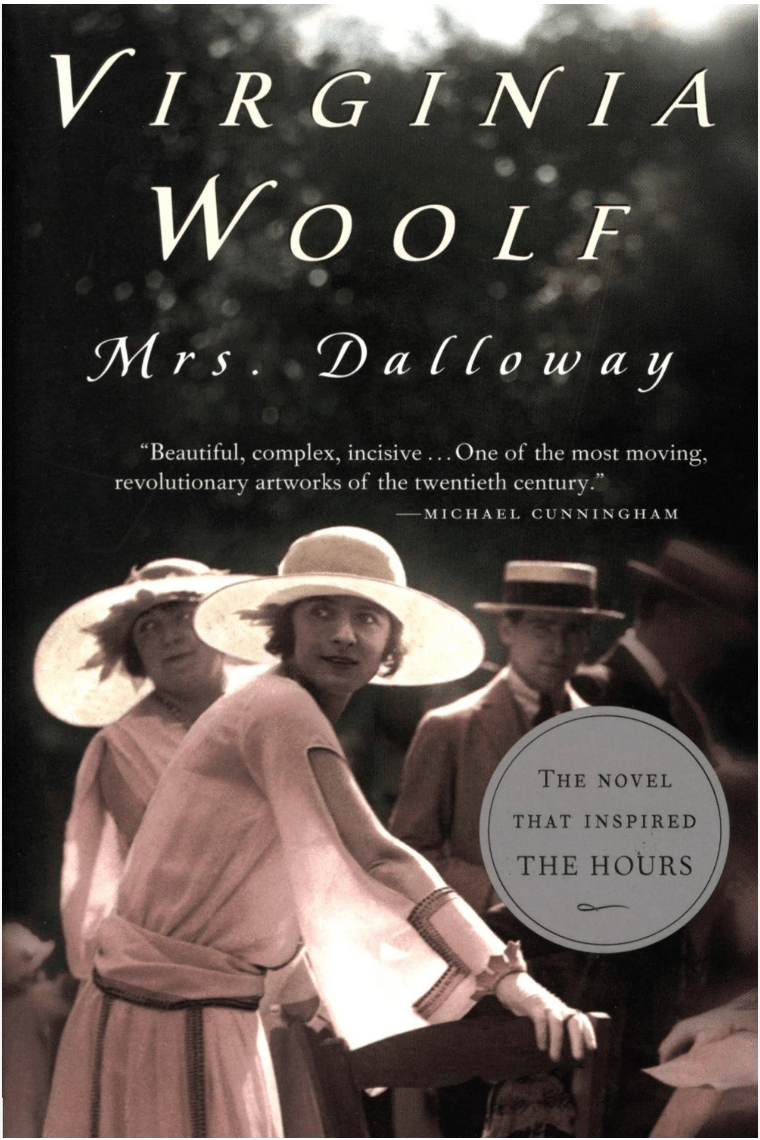
    World War I left disillusionment and pessimistic realism across Europe in its wake. Perhaps it was the personal ramifications of death of friends or family on the majority of Europeans, the rise of the first anti-war agitation groups prior to the war, or the great economic costs that took years to rebcover from. Historians and political scientists disagree on what made WWI the most impactful on public opinions turning away from support of war as a necessity of human nature up until the second World War, but no matter, the result is the same. The first World War led to a fracturing of European ideaological and cultural ideals and initiated the shift from romanticism and heavenly idealization of our world to a deep rooted mistrust, pessimism, and disillusionment with modern society. Death touched families across Europe tainting the glamour of the relatively peaceful century proceeding the War, though with edging tensions, and the question of how to rebuild society from such a calamity arose. It was in this deeply fractured world that Virginia Woolf wrote Mrs. Dalloway, a novel that as if soul-searching investigates the wounds of isolation on experience and understanding through the life of Mrs. Dalloway in which social conventions and propriety prevent true happiness or honesty. It is this analysis of the ruinsome nature of secrecy, untruthfulness, and poor communication that parallels Woolf’s advice for Europe in rebuilding, that advice being to emphasize the importance of human connection that fear and hatred long-since stole. 

    Mrs. Dalloway follows the life of an English society woman, married to a conservative parliament member and those she encounters in her life. Taking place in a single day, the tale describes the world and experiences evoked by it in precise detail and eloquent metaphors that in their complexity and idyosycracity seek to depict the extent of the human mind with all its juxtapositions. Sentences extend alongside the scattered nature of human experience, placing the reader in tandem with her purpose, to encourage connection, a goal that she fulfills through careful description of various characters inner worlds. A random couple on the street transforms from an odd family that only goes to town to see doctors into real people, a soldier suffering from a nervous disorder that he tells no one about and his hat making wife who only wants her husband back from seeming hysteria. A former suitor, Peter, transforms from a lost friend and regret into a troubled gentleman with chaotic love affairs, a judging nature, and a wide world knowledge who hasn’t forgotten his first love, Mrs, Dalloway, either. Richard, an unfaithful husband transforms into a misunderstood man who simply love his wife ans wishes to buy her flowers, though Mrs. Dalloway remains convinced he loves another, Lady Burton. Essentially the overarching thread through each character that Woolf introduces is their penchant for miscommunication. Characters, whether too scared, embarrassed, or judged for their their truthful desires or feelings, chose to avoid repercussions by living in isolation. Even, Mrs. Dalloways who married a wealthy man that loves her admits her unhappiness by the novels end for she feels suffocated by middle class expectations and eternally regrets her surpassing of Peter’s proposal due to his lower station, despite him being a man she cared far more for than for her husband. As a result, only the reader knows the extent of each character’s turmoils which society forces them to shield their true experiences from the world. 

    This isolation through miscommunication or secrecy causes despair and loss, which while not on the same scale as a multi-continental war offers a metaphor for the reasons that extended devastation last. Each character fails to connect with their community due to a lack of communication, much like the bonds between European countries failed to recover from the first World War, leading to remaining prejudices long after which escalated into further conflict of WWII. Mistrust permeated the relationships between cultures, between citizens and governments, and even between people within communities. Of course Mrs. Dalloway never provides the solution for these fractures, as to ask one literary work to resolve the destruction of European warfare would be laughable, but Woolf’s work does diagnose a massive source of discontent after the WWI and possibly before, societal limitations on communication. Honesty and human connection form integral parts of the human experience, and for them to be limited by social repercussions and devestations removes a source of human happiness. Thus, Woolf’s novel in diagnosing a source oh discontentment offers a possible diagnosis of the root of European fracturing after the world wars, posing that for united reconnection of the world must precede the total restoration of it.

  • Dostoevsky’s Demons

    Dostoevsky’s Demons

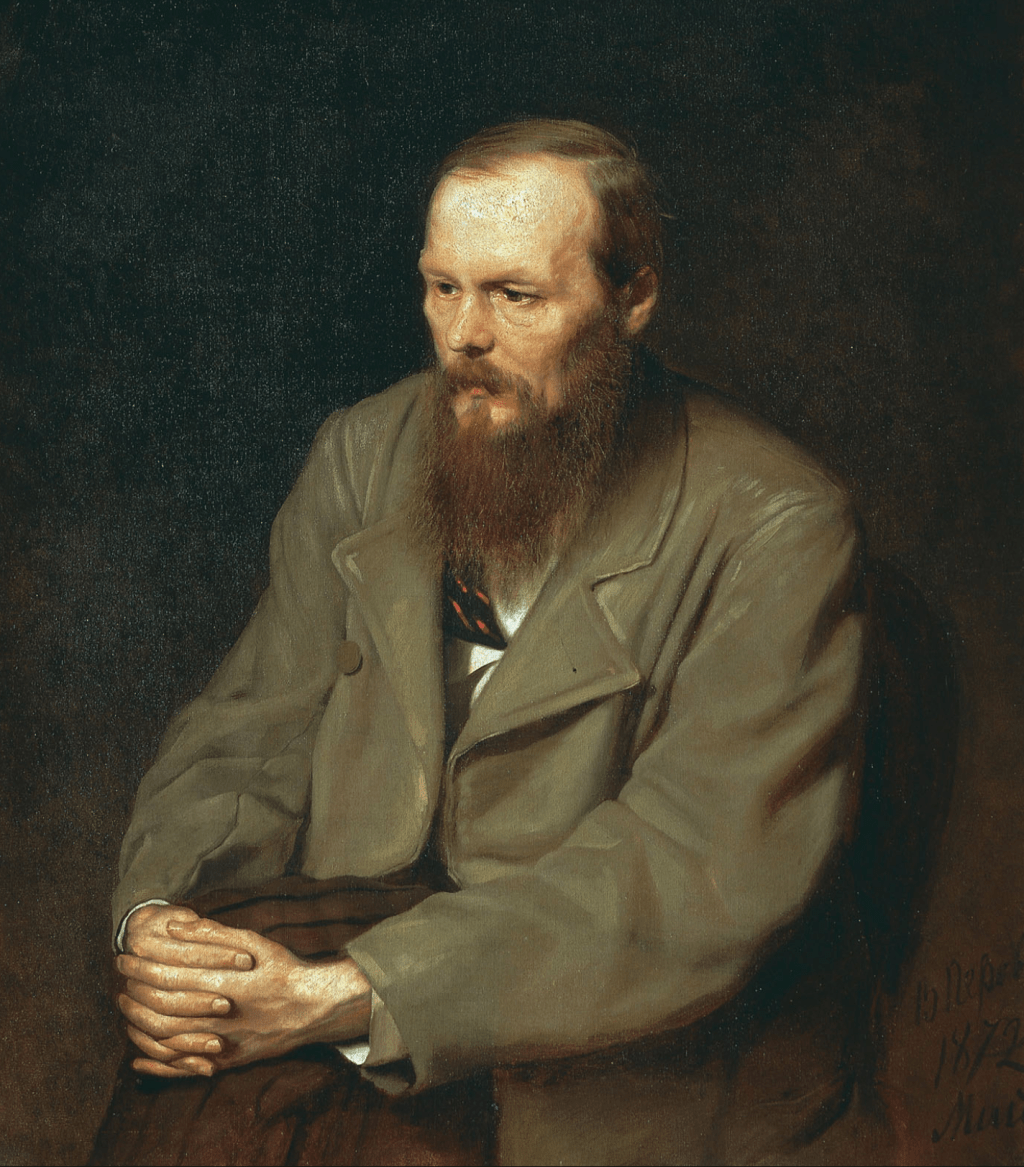
    Dostoevsky’s Demons begins with 400 pages exploring the Russian bourgeois and the frivolous and fickle nature of social conventions that do nothing but create confusion and misfortune for the characters. Stepan can not confess love, nor reject a marriage he does not want without social repercussions just as a lame woman can not escape her abusive brother or share her hidden unconsummated marriage due to her station. The entirety of the novel takes place in a game of social etiquette obscuring truth and making it easy to eliminate the value of life from one’s conscience as these conventions serve to eliminate meaning by making life seemingly pointless. This pointless feeling created by strict conventions that remove one’s innate connection from experience and the natural world, entering them into a nihilistic perspective.

    Within the novel a nihilist rebellion seeks to overthrow the Russian aristocracy, being headed by Pytor Stepanovich. The group makes their first movement by usurping a reading at a ball hosted by the governor’s wife in an attempt to destroy her credibility and invoke chaos and outrage before continuing on a spree of murders, each concealed by the tight secrecy of the Society. Their goal is to destroy the aristocracy as that is the essential first step to overthrowing the society they disdain. However, beyond destruction, there appears no set aim of the Society. They simply want to destroy a social system that values some more than others based on false conventions manufactured to uphold said conventions. They want to destroy it and to incite chaos, and yet have no ideas for what would make a better organized society. The Society functions on nihilistic whims and vengeance, but with no value in meaning, they offer no counter solutions for betterment. Further, this aimless society blindly follows Pytor Stapanovich’s personal ambitions as he as a person offers the most inspiration to those who have no ideals to inspire them. 

    Pytor Stepanovich’s charismatic and calculating manner however, doesn’t just strive for the destruction of society but facilitates a fascist leadership for the rebellion, a fascist leadership that nihilistic philosophy paves the way for him to uphold. He forces members of the Society to murder one of their own, burns a portion of a city to the ground, and forces a man to commit suicide and confess to the Society’s crimes on his death note. All of these ruthless acts are in the name of the destruction of the old society, designed to create chaos and from the ruins Pytor believes a new better society will grow, but with no values to govern the new society Pytor’s rebellion becomes pointless destruction headed by murderous fascism. Dostoevsky’s work is known for its condemnation of nihilism and Pytor’s failed attempt to facilitate a nihilist social movement which results only in death and fascism embodies this condemnation. In writing Demons, Dostoevsky sought to show how the elimination of meaning has dangerous repercussions. Without meaning, the idea of evil disappears and Pytor can continue to manipulate and murder people without consequence. Without meaning a social movement has no motivation and thus a controlling individual can corrupt and control an entire ideological system for their own gain. A nihilistic society thus, removes the regulation that protects the humanity of a society and the protections provided  by pre-organized institutions. This is not to say that the Russian aristocracy should have been upheld and that a society that opposes such an institution is wrong, but that in order for a social movement to take place that there must be ideological goals and aspirations in separation from any one individual.

  • Thomas Mann’s Magic Mountain

    Thomas Mann’s Magic Mountain

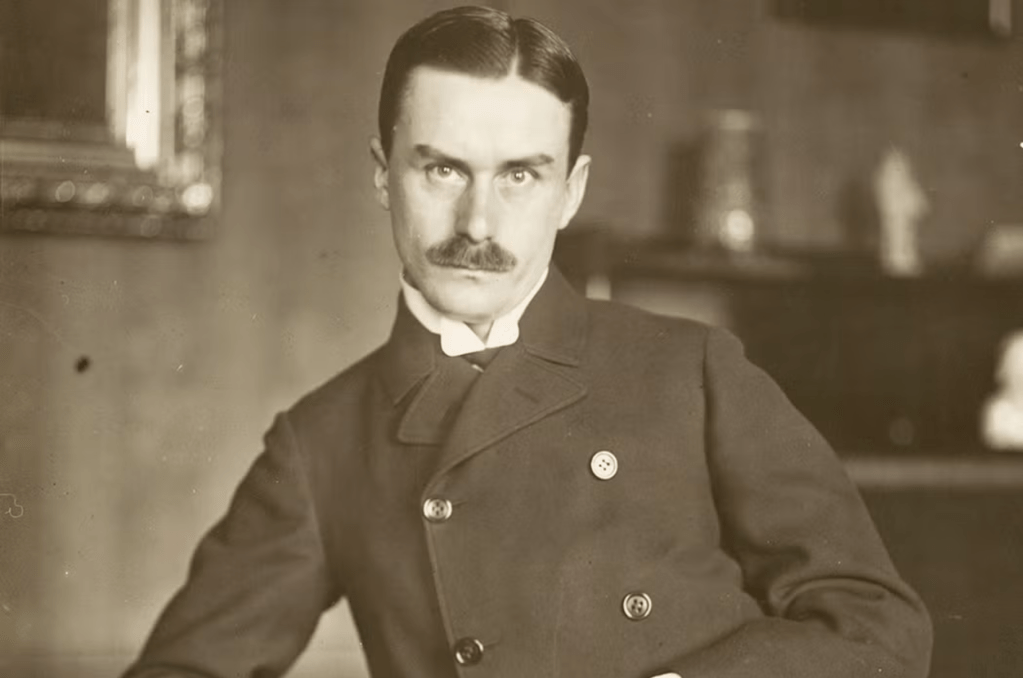
    The most recurrent annoyance I had while reading Thomas Mann’s  The Magic Mountain was my inability to understand the purpose of Hans Castorp spending his seven years at the Berghof Sanatorium, which while not a flaw in the writing should be examined as the strongest potential for Mann’s intention. Clearly, Castorp was indoctrinated by the Berghof’s culture and attached to its patients, perhaps even to the carefree lifestyle compatible with his bourgeois aspirations, but no matter the explanation he was man spending years of his life in a Sanatorium of which he only departed come the onset of World War One. It was in the Sanatorium under a Doktors diagnosis of a wet cavity in the protagonists upper body that Castorp gained admission for an extended stay at the Berghof which lasted for seven years during which he lost contact with his life in the flatlands due to both death and time. The Berghof negated the possibility of any other possible means of existence for Castorp until 1914 when the Sarajevo assassination initiated Europe’s fracturing and the death of the bourgeois lifestyle which Hans enjoyed atop the Mountain. 

    A Sanatorium which served as more of an enabler of a labourless, bourgeois lifestyle for Hans until its destruction in 1914 then seems to serve as a nationless center of intellectual and philosophical debate across the many cultures and values of its inhabitants. Patients visited the Berghof from Germany, Russia, Mexico, Poland, Sweden, and so on. These people of a variety of cultures lived together in a Sanatorium atop a mountain that though located in the Swiss Alps belonged to no nation in actuality. The Sanatorium was suspended from any sense of nation, place, time, or any other connection to reality, allowing for the freedom to engage in intellectual discourse that would have been frowned upon due to social conventions of any one place with a predetermined set of values. The Magic Mountain, while not actually magic, provided a separation from customary social conventions that enabled a vast expansion of ideas amongst its patients, a privilege that was only afforded them by their ability to dedicate years of their life and a constant expenditure to the Berghof. 

    Thus, a stay at a Sanatorium which never actually cured its patients of their ailments becomes appealing for far different reasons than just laziness or indoctrination. Rather, Hans Castorp sacrificed years of his life to the Sanitorium in exchange for intellectual freedom, making his extended break from reality into the most fulfilling years of his life. He no longer studies engineering, a pursuit that only held motivation in monetary value, and expands his brain into the humanities and other sciences under the tutelage of an Italian humanist, Settembrini. The reader then, in following the tale of Hans enters a world of intellectual stimulation that serves as an argument in favor of humanistic ideals of encouraging the constant permeating of oneself with knowledge, even beyond what one is culturally familiar or comfortable with. Through repeating descriptions of the monotonous arganization of the daily routine at the Berghof Mann furthers this invitation as with a structurally repeating the plot the novels source of pleasure becomes the discourse of the inhabitants who all represent varying cultures or ideological systems. Thus, Mann’s novel offers proposes the sharing of knowledge in separation from cultural divisions and judgments as caused by national prejudices and growing tension before the onset of WWI as the ideal means of living and the privilege of the bourgeois.