Author: Aubrey Wallen

  • Dostoevsky’s Demons

    Dostoevsky’s Demons

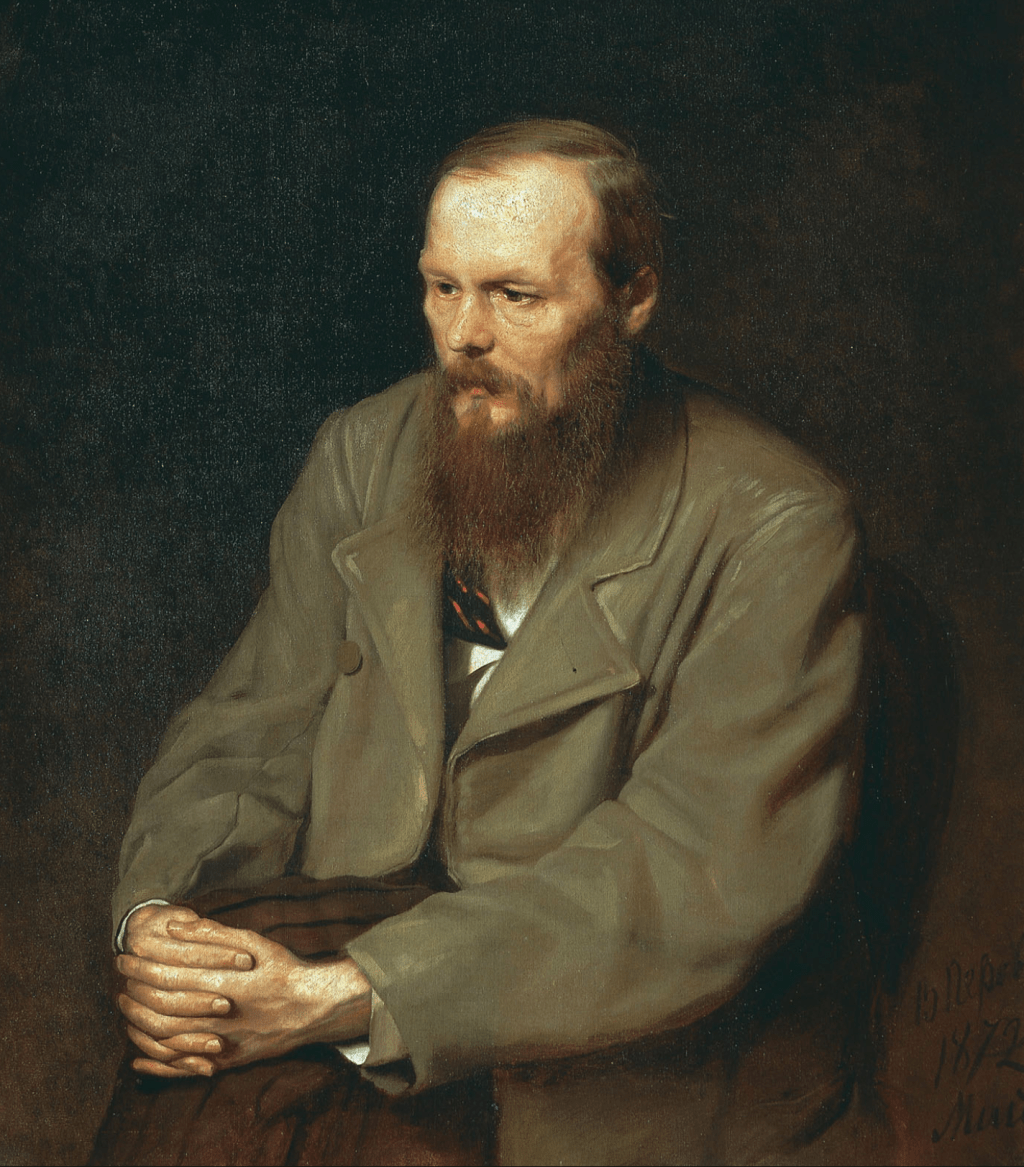
    Dostoevsky’s Demons begins with 400 pages exploring the Russian bourgeois and the frivolous and fickle nature of social conventions that do nothing but create confusion and misfortune for the characters. Stepan can not confess love, nor reject a marriage he does not want without social repercussions just as a lame woman can not escape her abusive brother or share her hidden unconsummated marriage due to her station. The entirety of the novel takes place in a game of social etiquette obscuring truth and making it easy to eliminate the value of life from one’s conscience as these conventions serve to eliminate meaning by making life seemingly pointless. This pointless feeling created by strict conventions that remove one’s innate connection from experience and the natural world, entering them into a nihilistic perspective.

    Within the novel a nihilist rebellion seeks to overthrow the Russian aristocracy, being headed by Pytor Stepanovich. The group makes their first movement by usurping a reading at a ball hosted by the governor’s wife in an attempt to destroy her credibility and invoke chaos and outrage before continuing on a spree of murders, each concealed by the tight secrecy of the Society. Their goal is to destroy the aristocracy as that is the essential first step to overthrowing the society they disdain. However, beyond destruction, there appears no set aim of the Society. They simply want to destroy a social system that values some more than others based on false conventions manufactured to uphold said conventions. They want to destroy it and to incite chaos, and yet have no ideas for what would make a better organized society. The Society functions on nihilistic whims and vengeance, but with no value in meaning, they offer no counter solutions for betterment. Further, this aimless society blindly follows Pytor Stapanovich’s personal ambitions as he as a person offers the most inspiration to those who have no ideals to inspire them. 

    Pytor Stepanovich’s charismatic and calculating manner however, doesn’t just strive for the destruction of society but facilitates a fascist leadership for the rebellion, a fascist leadership that nihilistic philosophy paves the way for him to uphold. He forces members of the Society to murder one of their own, burns a portion of a city to the ground, and forces a man to commit suicide and confess to the Society’s crimes on his death note. All of these ruthless acts are in the name of the destruction of the old society, designed to create chaos and from the ruins Pytor believes a new better society will grow, but with no values to govern the new society Pytor’s rebellion becomes pointless destruction headed by murderous fascism. Dostoevsky’s work is known for its condemnation of nihilism and Pytor’s failed attempt to facilitate a nihilist social movement which results only in death and fascism embodies this condemnation. In writing Demons, Dostoevsky sought to show how the elimination of meaning has dangerous repercussions. Without meaning, the idea of evil disappears and Pytor can continue to manipulate and murder people without consequence. Without meaning a social movement has no motivation and thus a controlling individual can corrupt and control an entire ideological system for their own gain. A nihilistic society thus, removes the regulation that protects the humanity of a society and the protections provided  by pre-organized institutions. This is not to say that the Russian aristocracy should have been upheld and that a society that opposes such an institution is wrong, but that in order for a social movement to take place that there must be ideological goals and aspirations in separation from any one individual.

  • Thomas Mann’s Magic Mountain

    Thomas Mann’s Magic Mountain

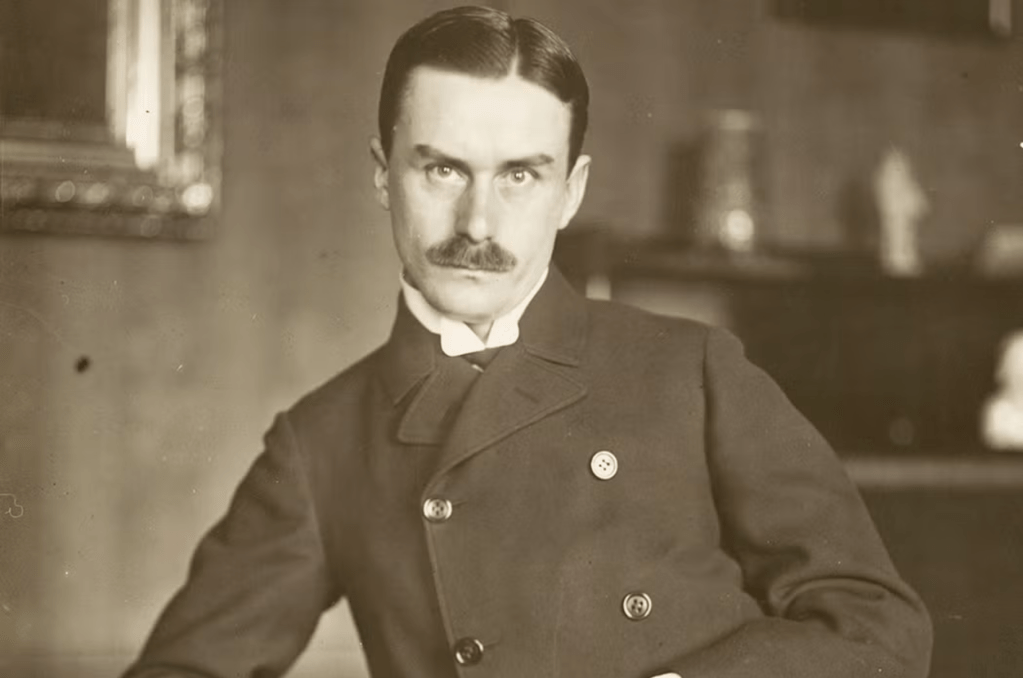
    The most recurrent annoyance I had while reading Thomas Mann’s  The Magic Mountain was my inability to understand the purpose of Hans Castorp spending his seven years at the Berghof Sanatorium, which while not a flaw in the writing should be examined as the strongest potential for Mann’s intention. Clearly, Castorp was indoctrinated by the Berghof’s culture and attached to its patients, perhaps even to the carefree lifestyle compatible with his bourgeois aspirations, but no matter the explanation he was man spending years of his life in a Sanatorium of which he only departed come the onset of World War One. It was in the Sanatorium under a Doktors diagnosis of a wet cavity in the protagonists upper body that Castorp gained admission for an extended stay at the Berghof which lasted for seven years during which he lost contact with his life in the flatlands due to both death and time. The Berghof negated the possibility of any other possible means of existence for Castorp until 1914 when the Sarajevo assassination initiated Europe’s fracturing and the death of the bourgeois lifestyle which Hans enjoyed atop the Mountain. 

    A Sanatorium which served as more of an enabler of a labourless, bourgeois lifestyle for Hans until its destruction in 1914 then seems to serve as a nationless center of intellectual and philosophical debate across the many cultures and values of its inhabitants. Patients visited the Berghof from Germany, Russia, Mexico, Poland, Sweden, and so on. These people of a variety of cultures lived together in a Sanatorium atop a mountain that though located in the Swiss Alps belonged to no nation in actuality. The Sanatorium was suspended from any sense of nation, place, time, or any other connection to reality, allowing for the freedom to engage in intellectual discourse that would have been frowned upon due to social conventions of any one place with a predetermined set of values. The Magic Mountain, while not actually magic, provided a separation from customary social conventions that enabled a vast expansion of ideas amongst its patients, a privilege that was only afforded them by their ability to dedicate years of their life and a constant expenditure to the Berghof. 

    Thus, a stay at a Sanatorium which never actually cured its patients of their ailments becomes appealing for far different reasons than just laziness or indoctrination. Rather, Hans Castorp sacrificed years of his life to the Sanitorium in exchange for intellectual freedom, making his extended break from reality into the most fulfilling years of his life. He no longer studies engineering, a pursuit that only held motivation in monetary value, and expands his brain into the humanities and other sciences under the tutelage of an Italian humanist, Settembrini. The reader then, in following the tale of Hans enters a world of intellectual stimulation that serves as an argument in favor of humanistic ideals of encouraging the constant permeating of oneself with knowledge, even beyond what one is culturally familiar or comfortable with. Through repeating descriptions of the monotonous arganization of the daily routine at the Berghof Mann furthers this invitation as with a structurally repeating the plot the novels source of pleasure becomes the discourse of the inhabitants who all represent varying cultures or ideological systems. Thus, Mann’s novel offers proposes the sharing of knowledge in separation from cultural divisions and judgments as caused by national prejudices and growing tension before the onset of WWI as the ideal means of living and the privilege of the bourgeois. 

  • Coast to Coast

    Coast to Coast

    From the striped plateaus, burnt red by western sun,

    dull blades of sandstone carved by the ocean’s hands,

    scattered with green spruce, firs, and dried sagebrush,

    and waterfalls trickling down slick stone bands,

    where I watched horned goats pounce on vertical cliffs 

    and climbed cave-bound rockslides in the dirt cloud’s midst. 

    From the Pacific’s rain-steeped tea of salt and mountain air 

    brewing fresh sprout lichens on cedar bark,

    where deep green mountains basked in sheets of fog,

    obscuring the ever fading horizon line,

    where I fed seagulls at the pier from dirt caked palms,

    and learned to sing to pitch with cawing birds.

    From the moss and willow strung foliage of the south,

    draped arches over murky green canals,

    swarming mayflies evading lumpy frogs,

    algal blooms coating the surface of the deep Bayou,

    where alligators basked scorched on flattened grass

    and I found adventure, swimming under docks.

    From the snow coat hills of the frigid north, battered

    by icy wind that buried broken life,

    with only oak and pine to counter the constant white

    until yellow buds explode in spring’s first breath

    where deer leave hoof prints in fresh snow each dawn,

    and I cleansed the Earth’s dirt lodged beneath my nails.

    From the east’s walls of trees that locked away the sky,

    but crumbled where the world met the shore,

    warmed by gulf storms rippling up the sea,

    waves disappearing behind the curve of the Earth,

    where sea birds dipped where the sky met the sea, 

    and I wished to wander forever, in distant depths.

    From the flat, muddy banks framing the Mississippi, 

    encircled by cotton fields, bordered by twig-like trees,

    where flowers bloomed duller each spring,

    basted in ship’s gray fog,where cranes 

    stood on single legs, submerged in puddled fields,

    and I left the caravan that carried me, to journey on my own. 

    My roots are sprawled and broken, ripped apart in shifting ground,

    grasping on to rocks on mountain tops,

    nourished with the sea of forest air,

    shouting, stretched in webs and moss,

    burying into snow until the season’s thaw, 

    forever fighting towards an eroding shore,

    and severed in the muddy flats that were never home.

    My roots are crawling, wandering to the world’s end,

    and maybe one day they’ll dig in deep,

    to find the ancient soil down below.

    Perhaps one day they’ll tie me home,

    but for now I’ll wander everywhere

    to see the world’s hidden coves.

    I’ll wander everywhere and travel coast to coast. 

  • That Moment

    That Moment

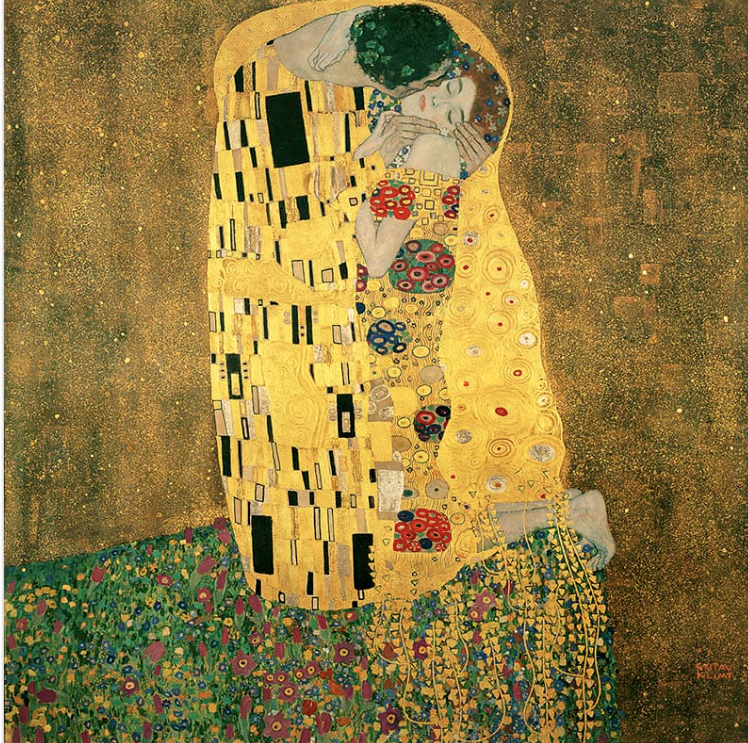
    The lights dim. The music starts, some sort of song specifically engineered to release Oxytocin into your bloodstream. The camera pans up and down the actor’s bodies as they hold their noses close enough to brush and yet, never kiss, as if that single touching of the lips would suspend all the suspense that the filmmakers dedicated hours to making. Hollywood has boiled romance down to a scientific art. They make a grand declaration or sacrifice—run across an airport, blare a radio beneath their window, apologize for every thing they’ve ever done wrong—and then softly they whisper, “I love you.” And just like that the adrenaline races further than it did before. It’s the moment of perfect intimacy that some directing genius dedicated their life to manufacturing, in a single film shot of a camera lens. It’s at this moment that they look in love, the most vulnerable, and so they do what everyone wants. They explore and taste and roam with their eyes sealed shut and their breath heavy. They learn each other in the most physical of ways, and the audience is meant to swoon at their filmed consummation.

    No one has ever told me they loved me. No one has offered me any heartfelt speeches, but I’m no stranger to physical vulnerability. That’s all they ever want, to touch, to taste, to try, to roam. The bed sheets crease and the room grows hotter. Two bodies entwined and yet, every time I fear that if I touch too soft, or look too high that they’ll pull away from me. I know that’s never what they want, for me to promise that I love them, to tell them that I care. We’re just bodies, and this is just life, and we’re just having fun, so who fucking cares.

     I’ve never seen my parents kiss, but I’ve seen my father hold my mother. The way their bodies molded together, two individuals not yet defeated, holding each other together. He held her hand and brushed her hair from tear born eyes. He softly kissed her forehead, soft and sweet and nothing more. I want someone to want to hold me, to touch my hair because it’s soft, to kiss my cheek or nose with no intent of wanting more. I want them to hold my soul within their hand and to feel as calm as she did when he held her. It’s the kind of moment that would never make it to the Hollywood screen. It’s boring and tame, perfectly mundane. No one writes that they want to be held. Everyone just wants to be loved, but for me, I think to be held, just once, would be enough.